Agile Elephant making sense of digital transformation

innovation | digital transformation | value creation | (r)evoloution

  • Email
  • Facebook
  • Google+
  • LinkedIn
  • Twitter
  • Home
  • Manifesto
  • Services
    • Our Approach
    • Our Services
    • Making Collaboration Work Packages
    • Collaboration Solutions
    • Our Experience
    • Workshops
    • Innovation
  • About Us
    • The Team
    • Why we do what we do
    • Why are we called Agile Elephant?
    • Our Partners
    • Our Clients
  • Get Involved
    • Events
    • Meetups
    • Unconference
    • Newsletter
  • Resources
    • What is Digital Transformation?
    • What is the Digital Enterprise Wave?
    • Our Research
    • Case Studies
    • People We Follow
    • Articles & Links
    • Books That Inspire
  • Blog
  • Contact Us
Home Archives for digital disruption
Only one third of UK businesses have “digital strategy” in place?  – actually it might be worse than that!

May 9, 2016 By David Terrar

Only one third of UK businesses have “digital strategy” in place?  – actually it might be worse than that!

A headline in Cloud Pro two weeks ago suggested only one third of UK businesses have a “digital strategy” in place, but actually it might be worse than that! Whatever the actual numbers, Cloud Pro’s article presents an important message that UK businesses, large and small, need to heed. I’d suggest the situation might be worse than a third of UK businesses on two counts:

  • First, the Ingram Micro survey was conducted from respondents attending Cloud Expo Europe, held in London on 12-13 April 2016. The important survey findings are published here, but it’s important to note that it was a tech savvy audience already aware of at least some of the emerging technology issues as they were attending a cloud event to find out more, and so not a general cross section of UK business.
  • Secondly, when many digital consultants and end user companies think digital transformation, they are only considering marketing and eCommerce, when actually the digital topic spans the whole of the business process end to end.
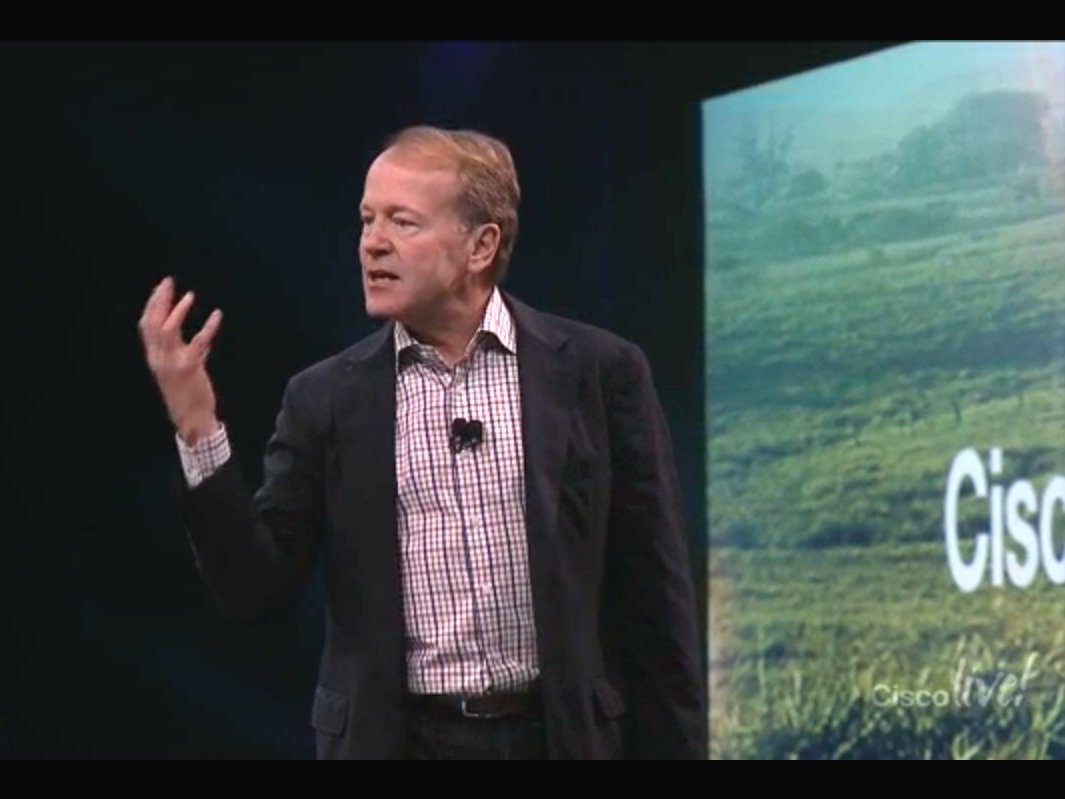
john-chambers-11.pngSo I’d suggest that an even larger proportion of UK business haven’t considered incorporating digital fully in to their business strategy. But why is it so important?  One of the people who have expressed it best was John T. Chambers, the outgoing President and CEO of Cisco, on the opening day of their Cisco Live event on 8 June a year ago. He told the 25,000 attendees, including many of his biggest and best customers:

“Forty percent of businesses in this room, unfortunately, will not exist in a meaningful way in 10 years,”

adding that 70% of companies would “attempt” to go digital but only 30% of those would succeed, and then he said:

“If I’m not making you sweat, I should be.”

“It will become a digital world that will change our life, our health, our education, our business models at the pace of a technology company change”

Chambers went on to warn companies that they could not:

“miss a market transition or a business model”
“underestimate your competitor of the future — not your competitor of the past.”
and
“Either we disrupt or we get disrupted”.

Digital Darwinism in plain English – I don’t think the consequences of missing the digital point have been have been expressed with more clarity!

If you want to find out more about this topic I’ve got two recommendations. Read more of the material here, but also consider attending the Enterprise Digital Summit Paris in June. You will know that we co-produce the London edition which will be in November, but we’ll be in Paris next month, and we’d love to see you there to talk real digital business.

John Chambers photo from UK Business Insider, Julie Bort
Share this:

  • Tweet
  • Email

Filed Under: #EntDigi conference, digital disruption, digital transformation strategy Tagged With: Cisco, Cloud Pro, digital transformation, end to end, Ingram Micro, John Chambers

The Gang of Four and why “there is nothing equitable about equity in a digital age”

February 5, 2016 By David Terrar

The Gang of Four and why “there is nothing equitable about equity in a digital age”

As a companion piece to my last post about the irresistible rise of mobile changing the face of the technology landscape, this piece looks at the big four companies that are succeeding there, but also the volatility and strange logic of the market, even for big social media brand names that are in the thick of and important in the change.  I’m writing against a backdrop of several weeks of speculation about where Twitter is heading, and then today’s dramatic share price drop for LinkedIn – 43 percent down today wiping out nearly $11 billion of market value so far, and the day’s not over yet.  What’s $11Bn?  Well, that’s 60% of the current value of HP…..

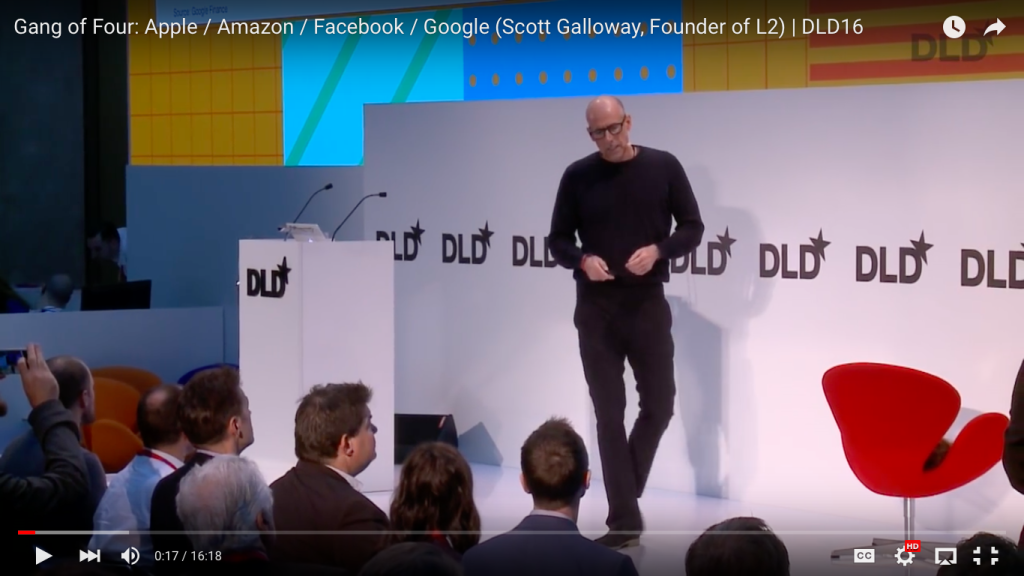
Like my earlier mobile post there is a must watch video at the core.  This one has NYU Professor Scott Galloway speaking at DLD16 in Munich a few weeks back on Monday 18th January talking about the Gang of Four – that’s Apple, Amazon, Facebook & Google.  The video went up on YouTube on the 25th January – at this second, 10 days later it has been viewed 520,618 times.  If you haven’t seen it, it’s definitely worth 16 minutes of your time to help you better understand today’s landscape and to learn some lessons from the steps the current titans are making.

Scott Galloway preceded his pitch with a brilliantly self deprecating health warning showing that some of his predictions will be wrong, but hoping that more will be right. Here are some of the things he said about the “four horseman of the apocalypse” Apple, Amazon, Facebook and Google:

  • In 2015 their combined market capitalisation rose from the GDP of Spain to the GDP of Canada
  • Each of the 4’s 2015 value is so large he compares each with a basket of well known brands in their sector to highlight their position
  • Amazon is the number 1 e-commerce player both sides of the atlantic, dwarfing the next 10 players in each market
  • Apple added $51Bn in revenues last year – that one year growth is more than the total 2014 revenues of luxury brands Louis Vuitton, Coach, Hermes, Michael Kors, Kering, Richmond and Prada combined
    Facebook and Google are growing at 40.3% and 12% compared to traditional media companies where they range from IAC’s 4.5% to Viacom’s -3.7%
  • “The advertising industrial complex is about to come to an end!” – last year 90% of CPG brands lost market share and 68% lost revenue “because advertising sucks!”
  • If you’re wealthy you can opt out of advertising with downloads, Netflix, iTunes, Tivo or Sky+
    He has quotes from fashion brand leaders highlighting how the fastest growing brands aren’t advertising in the traditional way
  • More venture capital going in to the ecosystem but fewer exits
  • The mobile ad market is a duopoly with Google and Facebook controlling 50% of the global market
  • Amazon has redefined the way we think about building businesses – it can be profitable any time it want but has made a conscious decision to run at break even because “profits are heroin to investors”, they get addicted to them and if you take them away, they respond negatively – he highlights Walmart’s recent capital investments to compete as the right thing to do, but the markets didn’t like the drop in profits and so the share price has gone down dramatically, where as Amazon is the master of consistency
  • Over 90% of the profit from the global smartphone market goes to Apple, then Samsun gets a bit, then the rest fight over the losses (the numbers on the slides don’t add up here, but the message is still clear)
    Apple’s revenue from PC’s is going up, everyone else’s is going down
  • If you believe the press, Apple’s Watch is a failure – Apple took away Samsung’s smart watch market share away as soon as they entered the market – ask Richemont and Swatch if they think Apple watch is a failure – he suggests Apple Watch will do $5-10Bn sales this year, but the entire Swiss Watch industry is $25Bn
  • He highlights the amazing rate of growth of Facebook, but then goes on to explain how they’ve only really monetised of its assets, and the potential they have with Instagram, WhatsApp and Messenger
  • Facebook are spending more per dollar on R&D than any other tech company in history – as well as being incredibly nimble with the number of products and releases they are doing, they’ve gone from 0% to 76% revenue in mobile in only 3 years – that’s a lesson in how to disrupt yourself and pivot
  • Scott explains how one of these four will become a Trillion Dollar company in the very near future
    He suggests Amazon should be acquiring bricks and mortar retail chains and become the true mini-channel retailer
  • Google needs a bigger business – he postulates they could go after the college education market
    Facebook, Google and Amazon are easy to understand, but what is Apple’s mission? He suggests they “pay an absence of vision tax”
  • Globalisation, free flow of capital, and the frictionless environment mean that i’s never been easier to be a billionaire, but never been harder to be a millionaire – it’s the middle classes that are getting squeezed
    With share options and stock being used as a regular motivator for senior people in companies, but look at the markets and the way companies are being valued – he says “there is nothing equitable about equity in a digital age”

Please watch the video to get all of this in his own words and the full story.  I’ll even forgive him the Adele segment:

He finishes excited by the technology opportunities, pleased by the meaningful things we are doing, but wondering whether we are doing anything profound. What all of this highlights for me is that there are key lessons to be learned from the way Facebook, Google, Amazon and Apple are innovating, expanding and addressing their markets that should be adopted by your business and my business, but that the equity markets don’t respond well to some of those moves required. I’m sure that’s why the likes of Dell have gone back in to private ownership, and why “going public” as an exit route is less important in the future plans of any of today’s startups.

Share this:

  • Tweet
  • Email

Filed Under: agile business, business innovation, digital disruption, innovation, Mobile, strategy Tagged With: Amazon, Apple, Conference Keynote, DLD16, Facebook, Four Horseman, Gang of Four, Google, markets, technology

The Irresistible Rise of Mobile

January 27, 2016 By David Terrar

The Irresistible Rise of Mobile

Last week part of a guest lecture I gave to students doing a Masters in digital marketing and social media at INSEEC’s London campus, I sampled Benedict Evans‘ great content around Mobile is Eating the World. Going through the material, and sending the students a link to a video version of one of his presentations on Vimeo reminded me of how crucial some of the data points are, and how so many people aren’t fully getting the significance of the shift happening right now!  You know, the wood for the trees and such.  Then a few other things conspired to connect in my synapses and reinforce the mobile story like this…

Firstly, in January it was 9 years since Steve Jobs announced the first iPhone which completely revamped, arguably created, what we now know as the smartphone market. There were clever phones and geeky devices from Nokia, Palm, Treo, HP, Sony Ericsson and others before iPhone that did email, web browsing, diaries, note taking and more, but Apple disrupted those with a completely new level of ease of use and “there’s an app for that!”.  Actually, it’s not even been 9 years.  We tend to forget how slow iPhone (and then Android) took hold. For example, in 2010 here in the UK the best selling smartphone in a crowded market was the Blackberry, both for business and consumers.  Teenagers loved it because of Blackberry Messenger using their data plan instead of the cost of sending text/SMS messages, and for the physical keyboard.  Blackberry had over a third of the UK smartphone market at that point, and if you separate out the pay as you go segment (those younger consumers), it was more than 50% at a point in time, and that’s only 6 years ago.  Things move fast in today’s disruptive business landscape. Android came along, then the iPad arrived in 2010 and Mobile started eating the World.

Just a few days ago Shel Israel and Robert Scoble announced they have started their 3rd book together called Beyond Mobile.  In their explanation they highlight that smartphones are unquestionably the most ubiquitous digital device on Earth and look to the future.  They suggest technology is going beyond the smartphone, getting closer to us people, and maybe even gaining holographic projection – very Star Wars and “help me Obi Wan Kenobi”.

Well, if you haven’t reviewed Benedict Evans material, I urge you to invest the time and watch the video version below to hear his own explanation of the slides, and grab the latest version from Slideshare.  He covers important data points such as:

  • By 2020 80% of the adults on Earth will have a smartphone
  • There will be more mobile users in Sub Saharan Africa than have electricity
  • The iPhone average price is higher than the average PC price, but that the $35 entry price for Android is driving the reach of that Third World market
  • That the smartphone industry dwarfs PCs with 4Bn people buying smartphones every 2 years rather than 1.6Bn buying PCs every 5 years
  • That mobile and smartphones dwarfs the electronics market for TVs, cameras and game consoles too
  • The shift in computing platform dominance from Microsoft towards Apple and Google

He talks of the profitability of Apple’s high end slice of the market set against the units sold for Android for the mid to low priced segments, about ecosystems and Facebook and plenty more, so go listen here:

https://vimeo.com/130722577

I regularly contrast the January 2014 acquisition of WhatsApp for $19Bn with Microsoft swallowing Nokia the same month for $7.2Bn.  Here’s another data point from last year that’s on Ben’s slides.  Globally there are 20Bn SMS messages sent by all phones, all carriers in a day.  WhatsApp sends 30Bn messages a day (supported by just 40 engineers).  What!  Well, that tells me if you haven’t put WhatsApp on your radar for business communication, you better start considering it in the near future.

And lastly, I’ve been listening to the news around Apple’s latest results, the negativity of the headlines and the way it is being reported.  Tim Cook forecast that revenue for the next quarter would be between $50bn and $53bn, below the $58bn it reported for the same period a year ago.  This will be the first time since that 2009 iPhone announcement that revenue might go down, but the actual results reported were Apple’s best quarter for revenue and profit ever!  If you look at their other products, the fact that their Mac sales are bucking the trend so they are the only PC manufacturer with sales going up, their further retail expansion in China, opening retail stores in India, looking at the way the strong dollar affects them overseas, and then their cash reserves – I find it difficult to understand the share price going down. The markets regularly confuse me.  The reporters and analysts ask what Apple’s next big thing or wonder device will be.  Their R&D must be looking at all sorts of things only they can imagine, but all of the above highlights that mobile is such a big piece of the technology pie, and they own the high ground.  I’m not expecting some new device category, but I am expecting good incremental improvements in existing products that will still excite the market.  Putting the car to one side, Apple have a huge opportunity for more revenue from their app ecosystem, and the whole area of social technology connected to their devices and ecosystem which they’ve never understood properly or had any success with. There must be some sensible acquisitions on the horizon to start making a dent in that.

But the bottom line is that Mobile really is Eating the world, and pulling a whole load more software opportunities, compute and storage infrastructure requirements, LCD displays, technology opportunities, and new business model possibilities with it.

Share this:

  • Tweet
  • Email

Filed Under: digital disruption, Mobile

Future of Work – a Blockchain primer

December 9, 2015 By David Terrar

Future of Work – a Blockchain primer

A few weeks back on 19 November I attended a Blockchain event – one of the Future of Work sequence of sessions sponsored and hosted by Truphone, organised by Lloyd Davis of the Tuttle Club and Helen Keegan of Heroes of Mobile.  These sessions explore different technologies and their potential impact on the business landscape, and the workplace. It was an interesting event, with singer Imogen Heap talking new approaches and business models oriented towards the working musician within the music industry, but it wasn’t quite the topic primer on Blockchain I was looking for.  A good event nevertheless, and the second part of this post covers my notes on Imogen’s session.  But first I want to relate the subsequent homework I did to figure out how to explain why Blockchain is so important.

Part of the problem with talking Blockchain is that commentary on it is often strongly tied to the digital currency that it supports – Bitcoin. That single implementation overwhelms most explanations of the underlying technology. I’ve looked at a lot of explanations generated over the last year and come away puzzled, but the best I’ve found is from Mike Gault on re/code on July 5. He starts by saying:

“Imagine that you’re walking down a crowded city street, and a piano falls from the sky. As dozens of people turn to watch, the piano crashes down right in the middle of the street.

Then, without a second to lose, every person who witnessed the event is strapped to a lie detector and recounts exactly what they saw. They all tell precisely the same story, down to the letter.

Is there any doubt that the piano fell from the sky?”

This is the innovative and disruptive concept behind blockchain technology – a distributed consensus model for recording digital events of any kind.  A way of simply and easily creating a digital ledger of events that is automatically duplicated across many nodes and could be recording anything from an exchange of currency, to a contract, to any step in a process that needs to be certified and verified.  Wikipedia tells me that blockchain is a permissionless distributed database, derived from the bitcoin protocol, that maintains a continuously growing list of transactional data records hardened against tampering and revision, even by operators of the data store’s nodes.  Each blockchain record is enforced cryptographically and hosted on machines working as data store nodes.  The cryptography combines with the fact that the records are duplicated across many nodes in the network so that tampering with a record would be so astronomically “expensive” as to be impossible in practical terms.

Think of what that could change in business.  At the moment so many processes rely on some trusted intermediary and a multi-stage process of exchange. Whether that’s a bank, or an accountant in practice, or a law firm, or some legislative body with a compliance procedure to follow or a combination of several of these things.  Suddenly, one or more layers of process complexity could be taken away and replaced by a single ultra secure transaction in a ledger.  If we are talking money, then we are used to a system of promisary notes, bank notes, bank cards, online banking systems and phone apps that access our money, controlled by the institutions which print the notes, record the amounts, exchange them with our customer and supplier bank accounts, trade them in to other currencies for exchange, or hold them in secure vaults.  These can be replaced by a digital ledger and much simpler processes without the need for all of that administration and physical infrastructure.  The same digital concept can be applied to simplify the processes around agreeing and verifying a contract, a person, ownership of a thing, or any sort of event, in the broadest sense, that needs to be trusted.  Take a look around the audience at the next Blockchain event you are at, and you will see that banks, law firms and accounting practices are taking note and getting educated.  New markets and new ways of working are going to be created alongside legacy infrastructure, similar to the way basic mobile phone message technology has been so disruptive in Third World markets in recent times (but on steroids).  A lot of what we now consider as normal business practice will change over the next 10 years because of the Blockchain.

Imogen HeapSo let’s head back to Imogen Heap the Grammy Award winning composer, performer, recording engineer, technologist, and inventor talking about the music business.  She explained her Mycelia project, taking it’s name from fungal colonies of mycelium forming the largest organism in the World, relating that idea to the music business.  The music content are the nutrients underground and above ground you access them with Spotify or iTunes or YouTube but using Blockchain technology.  The model would change from the current centralised model where the record companies are the intermediary gateway controlling everything, to a distributed network where the creator of the content, the musician, would have the power.  Imogen would know every time one of her pieces was downloaded or played, and she would control the cost and decide if and when it might be free.  Mycelia would have open and shared data so that fans could find out about the bands they were interested in.  There would be tools to help, curation provided, and choices available so you wouldn’t just have access to a small compressed music file, you could choose the high resolution version to get the full sound experience that was created in the studio.  The approach would make the revenue splits between the musician and other parties involved transparent.  There would be Blockchain based smart contracts as an integral part of this new solution.  Imogen has been interviewed by Forbes magazine around this topic.  She worries that the music industry has boxed itself in to a corner where their model is based on producing a few big hits a year and so the industry is too top heavy.  Actually, like any market, we need healthy competition but coming back to her mushroom analogy, we need to nourish the base layer of the industry.  Her belief is that the key to that is to make the whole process easy, in the way Napster was when it first started to subvert the industry.

At least part of the problem is the cost of production, and how the music companies manage the capital involved and act like banks towards new acts, funding an album with advances that then need to be paid back with interest. Some musicians are getting around that problem with technology like Kickstarter.  For example, I’m a fan of the American-Irish band Solas.  I’m one of 726 backers who have pledged $46,199 to fund the studio recording of their next album, celebrating their 20th anniversary, called All These Years.  That’s a good work-around, but Heap would like that concept to become part of the new structure and approach.

So Blockchain could definitely change the music business, but there are plenty of applications where it will be changing industry and the world of work before 2020 and 2025.

Share this:

  • Tweet
  • Email

Filed Under: digital disruption, events, future, ideas, workplace Tagged With: bitcoin, blockchain, future of work, music

Enterprise Digital Summit London 2015 – #EntDigi impressions and key messages

October 27, 2015 By David Terrar

Enterprise Digital Summit London 2015 – #EntDigi impressions and key messages

Here’s a Storify summary of impressions, tweetable slides and key messages from the 22 Oct 2015, Enterprise Digital Summit London event, selected from the #EntDigi tweet stream and flickr photos.

We’ll be publishing more posts, impressions and write ups here soon.  Please contact us if you want to find out more.

Share this:

  • Tweet
  • Email

Filed Under: #EntDigi conference, collaboration, digital disruption, digital transformation strategy, Enterprise Social Network, future, organisational culture, social business, workplace

Transaction Costs in the New Economy – WTF?

September 3, 2015 By Alan Patrick

Transaction Costs in the New Economy – WTF?

I have been following the development of Tim O’Reilly’s “WTF” (Work – The Future) essays as it may be a useful gathering point for a lot of the emerging thinking about the space, which is very scattered right now.

One of the essays is on the replacement of Firm based value chains with networked value chains, the argument as to why this will happen is effectively Coasian. Ronald Coase looked at why firms existed in the 1930’s, and came up with the idea of Transaction Costs, those small frictions in doing business. Coase argued that a firm exists when Transaction Costs make it cheaper to operate a business as a managed entity rather than have to buy from/write a multitude of contracts with mutiple suppliers for every little thing.

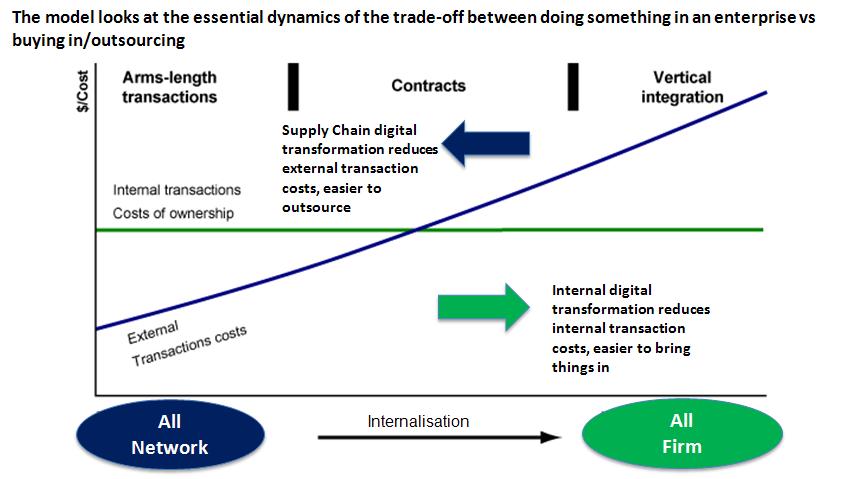
The diagram above shows how this works.

The rising Blue line shows the increasing Transaction Cost as the transaction becomes more complex from left to right.

  • Arms Length transaction – buying a coffee – very simple, very low cost to perform
  • Contract – a more complex transaction, something needs to be set up before/during/after a simple transaction
  • Vertical Integration – a very complex transaction, typically used where there is a need for synchronisation with upstream and downstream activity.

The horizontal Green line is the cost of doing any transaction within a  firm, essentially it is a fixed cost of overhead, so any in-Firm transaction costs are in effect the same. Coase argued that the Firm will want to do all the work internally where the Green line is below the Blue, as this costs less. As expected it tends to be the more complex transaction that the Firm will take internaly.

And this is how it has played out to date. As the industrial revolution gathered pace, firstly it was easier to integrate a series of vertical activities in a Factory, and then get efficiencies of scale and automation via unified operation, and we have the modern “traditional” Firm emerging. Small craftsmen and guilds were squeezed out as this process intensified. It also became easier in some industries to contract for someone to arrive at work every day, on a one-off employment contract, rather than negotiate with work gangs every day, so workers were hired on long term employment contracts. There was “peak integration” in the early 20th century when companies like Ford did everything from mining iron to repairing cars, but that was a temporary phase. (This is a subject in itself, for another post, but in essence scale and complexity adds exponentially to transaction costs)

Most company value chains today look like the diagram above, where some work is carried out in Firms, some is contracted out to suppliers and contractors. The impact of 50 years of ICT is that it is continually reducing transaction costs across the value chain, and the argument of some people is (and has been for c 10 years at least, I may add) that we are getting to a “tipping point” today where the gap between today’s transaction costs and how most Firms still work are large enough to create a disruptive movement in the blue line/green line crossover point, far to the right, and we are looking at New Ways Of Working. This view is explained in an essay on the subject by Esko Kilpi in the WTF canon. In essence, the argument is that technology is dropping transaction costs outside the Firm faster than within it, and thus the structure will shift from Firms as intermediaries between customers & suppliers- ie the green line will move to the right, and work will move to a multiplicity of suppliers and contractors in networks, delivering services at lower transaction costs. Kilpi argues:

What really matters now is the reverse side of the Coasean argumentation. If the (transaction) costs of exchanging value in the society at large go down drastically as is happening today, the form and logic of economic entities necessarily need to change! Coase’s insight turned around is the number one driver of change today! The traditional firm is the more expensive alternative almost by default. This is something that he did not see coming.

(Hmmm..Coase would have known the cost is shiftable either way by definition). Anyway, Kilpi argues that the outcome is that:

Accordingly, a very different kind of management is needed when coordination can be performed without intermediaries with the help of new technologies. Digital transparency makes responsive coordination possible. This is the main difference between Uber and old taxi services. Apps can now do what managers used to do.

For most of the developed world, firms, as much as markets, make up the dominant economic pattern. The Internet is nothing less than an extinction-level event for the traditional firm.

There are two major caveats with this line of reasoning, however:

  • Firstly, ”If” – as in “If  the (transaction) costs of exchanging value in the society at large go down drastically”….. This “If” has a rider, which is there will only be a shift Also If the transaction costs of Firms also do not reduce, i.e. are not equally affected by these same technologies. If those In-Firm transaction costs also go down, using the same sorts of technology, then there will not be a great shift to “exchanging values in the society at large”.
  • Secondly, what are these replacement economic entities going to look like when the firm sheds transactions? Who will operate and own them? Will they be bedded in the “society at large” or not? There is an implication in Kilpi’s work that these are not intermediary structures, the WTF essay assumes they will be set in these newfangled Internet networks and called “Plaftforms”. However, if you look at the example given in the essay as a harbinger of the new  – Uber –  it is clearly just another Firm, using t’Internet rather than t’Phone. As to value exchange, it remains a centrally placed intermediary. All links lead to and from Uber. All transactions (logistical and financial) are routed through Uber’s servers, within its own network. If this is a “new” network economy, it is a highly centralised and closed network, with all nodes owned and run by Uber, as any before.  All that “society at large” is doing is supplying or ordering a taxi ride and paying for it at the edge if the network, as it did before, just that now its by App transactions rather than ‘phone or hail ones.

In this case one “traditional” Firm, the original Taxi Company (or in fact many Taxi Companies), have just been replaced with another, newer, one – Uber.  A new Firm has used newer technology to reduce the transaction costs in a well worn existing business model (order taxi – route taxi – pay taxi)  and is now using good old fashioned In-Firm competitive advantage to take market share from existing Firms with higher transaction costs.  Uber only needs a “very different kind of management” insofar as it is managing more machines, less people in its workflow.  It’s network is a good old heirarchical network, just more automated.

Same web, different spider.

So what is the real competitive advantage here? This is not a replacement of today’s intermediaries by some new, paradigm shifted economic entity. It is merely an automation of labour within today’s standard operating model. There are still taxi drivers and customers, needing roughly the same transactions to manage the service. Apart from getting a smoother taxi ordering process it’s just business as usual, there has been no fundamental transformation of the value chain, that a competitor cannot replicate to a “good enough” standard, fairly quickly. Looking closely at the real economic differences, it seems  that some of these transaction cost reductions are due to evading existing labour rights and supplier/customer regulations – a point conveniently avoided in many discussions, but again one has to ask how sustainable this is (see further down the page).

At this point it’s worth introducing another counter-intuitive issue of the new technology is the following – Kilpi is correct when he says that:

“Managerial overheads increase as the organization grows. Whenever the transaction costs inside the organization reach the level of the transaction costs in the markets, markets outperform firms and outperform central planning/management coordination in general.

The Internet, together with technological intelligence, makes it possible to create totally new forms of economic entities, such as the “Uber for everything” -type of platforms/service markets that we see emerging today. Very small firms can do things that in the past required very large organizations.”

However, the corollary is that if a Firm improves its internal transaction costs at a faster rate than than the outside markets, it actually becomes more efficient and thus can bring more functions inside itself. I would argue that baed on current evidence this “Uber for Everything” world is currently not going to evolve to any form of new non-intermediary economic entity, or some form of value sharing network. Instead the trend is towards becoming a line up of lower transaction cost super-Firms, large intermediaries each dominating it’s own industry sector with its own efficient centralised network,  and walled gardens to maximise internal value (you can’t take your reputation from Uber to Airbnb, for example). There is a trendline of huge New Firms establishing sector dominance – Google, iTunes, Amazon, Facebook, soon Uber?

Transaction Costs per se are clearly only a part of this story.

Just follow the money – these UberFirms would not have “Unicorn” valuations if the surplus in the value chain was going to be spread across a host of other small players in a network, their backers are taking a Firm bet on where much of the surplus ends up.

And follow the spend – its all about market growth, including using investment money to undercut incumbents to gain mass market share fast, and increasingly to lobby against forces trying to recreate level playing fields in terms of regulation & employment laws.

In fact the major economic drivers of these UberFirms’ advantage are not the technology driven transaction cost reductions from ICT, but the labour and regulatory savings. And this has been true overall for many a decade. The big driver of outsourcing was lower regulatory and labour costs in developing countries, not the transaction cost reduction from adoption of ICT on every desk and cheap global telephony. What has really changed in UberFirms is who the employees nominally work for, their working conditions, and which regulations the UberFirms believe they can avoid.

However, there is already starting to be pushback from existing competitors, regulators and employment institutions to ensure a more equal playing field. This is why, as these efforts are starting to level the field, some of the Uber-alles plays have already had to shut up shop. Uber’s own model is under attack and it is having to shift more of its resources into lobbying, undercutting competitors and public pressure to keep the arbitrage gap open (….long enough to IPO at Unicorn valuations?).

Where Kilpi is spot on is when he says:

We stand on the threshold of an economy where the familiar economic entities are becoming increasingly irrelevant. Technological advances, like smartphones together with cloud computing, allow people to have a computer in their pocket that is more powerful than any in the world 20 years ago.

But again the impact is counter intuitive. What has happened in effect is that though the processing capability of a “wired” customer or service supplier has gone up dramatically, this typically has not facilitated any major societal value shift or new societal network emergence. If anything, the history of the Internet since c 2010 is an increasing walling off of what were once open societal network areas, even as end user devices have got more powerful. What has happened is that an increasing part of the “hard to automate” workflow is outsourced to the supplier and user at the network edge (via their smartphones) and much within is automated. But whether it’s Google ousting Yellow Pages, Apple iTunes ousting Tower Records (Napster was truly Societal, and look what happened there 😉 ), Amazon ousting the local bookshop or Uber ousting a Taxi firm near you, a Firm is still very much in charge.

So to conclude, the statement that:

“The Internet is nothing less than an extinction-level event for the traditional firm”

Is true, but is qualified – If:

  • The traditional Firms cannot digitally transform themselves sufficiently to compete well enough, soon enough.
  • The UberFirms can avoid a levelling of employment & regulatory conditions, and afford to undercut long enough, to drive the traditional Firms out of business.

If….

That is the traditional Firm’s challenge…… and some will fail. But it is far from a given that existing players cannot win this game. How an existing player can compete will depend on the sector, but some the obvious things to do are to:

  • Keep the UberFirm at bay while transforming yourself, by persuading authorities to create a level playing field in terms of employment conditions & regulation, and delay or limit entry until this is done
  • Use positional advantages to give customers value from existing asset bases that the UberFirm then has to subsidize
  • Restructure their own operating model where they cannot achieve the above. (This is however culturally often very hard)
  • Adopt the new technology to bring their own transaction costs down to a “good enough” level to retain customers
  • Focus on your market, and the scale really rquired to serve it – do you actually need more than one city to be a great Taxi company?

We will examine the real operating economics of these new UberFirms, what traditional Firms can do in response, and how a genuine networked economy may come about in more detail in subsequent posts.

As an aside, we are running our 2nd London Digital Enterprise Summit on October 22nd – details, speakers & agenda are over here

Share this:

  • Tweet
  • Email

Filed Under: digital disruption, strategy Tagged With: AirBnB, Ronald Coase, Tim O'Reilly, Uber, WTF

Digital Transformation of the Office – Agile Elephant’s 7E Approach

September 2, 2015 By Alan Patrick

Digital Transformation of the Office – Agile Elephant’s 7E Approach

One of the areas we have been working on is exactly how to implement Digital Transformation projects.   At Agile Elephant we are all old enough to have seen many implementations of software, processes, ways of working etc., and have seen flops, failures, fads that come and go, and even some successes.  One of the things that has exercised us is the best approach for Digital Transformation.  As our approach is to look at “what works, what doesn’t” when designing “what’s next”, we thought it may be useful to share some emerging thoughts.

To no one’s great surprise, we found failure by and large followed the “Anna Karenina Principle” – i.e. there are multiple modes of failure.  But some are more obvious and predictable than others, and one of the major ones is using inappropriate project planning, implementation and progressing approaches.  It’s worth looking at the pros and cons of the main approaches, the relative benefits are summed up conveniently in Wikipedia:

Agile methods Plan-driven methods Formal methods
Low criticality High criticality Extreme criticality
Senior developers Junior developers(?) Senior developers
Requirements change often Requirements do not change often Limited requirements, limited features see Wirth’s law
Small number of developers Large number of developers Requirements that can be modeled
Culture that responds to change Culture that demands order Extreme quality

(Wirth’s law is a computing adage which states that software is getting slower more rapidly than hardware becomes faster.)

To summarise these approaches:

Agile methods  are essentially adaptive, a broad plan is laid and development adapts to situations as they occur – very good for building things that don’t exist, but can go haywire and build up costs fast.

Formal methods mostly try and anticipate plan for every contingency in advance, and do value and risk analysis to prioritise and cater for unknowns, and everything is modelled.  Work well in known environments but often go badly wrong trying to do new things.  They are still essential where cost of materials and people is very high and quality of outcome is critical, e.g. Aerospace.

Plan-Driven is the approach of defining a project plan upfront, then putting a team together to manage it in all its vicissitudes over time.  It lies somewhere between these other 2 approaches.

As Digital Transformation is fairly “new fangled” and many different and relatively new tools are being tested in practic at the same time, one thing that is certainly true is that these projects will be very hard to plan in great detail upfront, will need a lot of change during implementation, and there will be a lot of iteration.  That suggests a need for a strong element of the Agile approach.  Unfortunately, that’s not enough as some of these projects will be of high criticality, and the initial culture will probably be more comfortable with some form of order, so a plan driven approach is important. (My own experience of Agile development is it is very good AFTER you have set up the overarching frameworks, but in more detail than Agile likes. They may change, but at least you have an original yardstick to measure variance from). The highly disciplined Formal approach is probably not appropriate in the majority of cases.

There are hybrid models, trying to allow some form of adaptability within a structured plan.  To us the most useful of these are encapsulated in the term Agile Management, which is essentially the combination of Agile software production with elements of the well tested Just In Time / Lean Operations operating model (or more accurately, the disciplines within it – data transparency, self solving work teams, continuous improvement, designing out errors etc.) and we believe this approach holds the best hope.

But even Agile Management really only focuses on software and methodology development, and not implementation of new ways of working, which is more a change management process.  And if there is one thing any Digital Transformation will have, it’s a lot of new ways of working.  If you look at the lasting principles of change management, any approach must be able to get over the “Machiavelli barrier”, i.e.:

There is nothing more difficult to take in hand, more perilous to conduct, or more uncertain in its success, than to take the lead in the introduction of a new order of things. For the reformer has enemies in all those who profit by the old order, and only lukewarm defenders in all those who would profit by the new order this lukewarmness, arising partly from fear of their adversaries … and partly from the incredulity of mankind, who do not truly believe in anything new until they have had actual experience of it.

Any plan thus needs to show people why you are doing this and what’s in it for them, that they won’t get shot if they do it, and that it will work – thus, as well as A Plan and a reasonably agile execution approach, there needs to be a WIFM and a WYSIWYG:

WIFM – What’s In It for Me?

Any change programme must have these elements to persuade the “luke-warms”

  • Benefit management objectives (those that align to business realities, anyway)
  • Define measurable stakeholder aims
  • Create a business case for their achievement (which should be continuously updated), and monitor assumptions, risks, dependencies, costs, return on investment, dis-benefits and cultural issues affecting the progress of the associated work.  No can do, no will get resourced for anything more than pilots
  • Effective communication that informs various stakeholders of the reasons for the change (why is this necessary?), the benefits of successful implementation (what is in it for us, and you) as well as the details of the change (when? where? who is involved? how much will it cost? etc.)
  • Devise an effective education, training and/or skills upgrading scheme for the organization
  • Counter resistance from the employees of companies and align them to overall strategic direction of the organization
  • Provide personal counseling (if required) to alleviate any change-related fears
  • Monitoring of the implementation and fine-tuning as required

That’s not enough though – to really effect change, the luke-warms need to know they will be protected from their detractors, and the detractors/resistors/nay-sayers/profiters from the current situation also need to know that it is not a risk-free option to throw tomatoes.  This is important, most people know that many projects lure in the enthusiastic, they are backfilled in the line, and when the initiative is strangled by the Old Order, they have no job to return to or go to and a suspicion they are now tainted anyway.

The approach to this that seems to work best is for the business to put out, in game theory terms, Strong Tells – ie signals that This Is Important To Us – for example:

  • Top Management Support….  that is seen to be supportive
  • Real commitment to protect those involved from repercussions, in hard terms (aka career and/or financial protection)
  • Some form of “air cover” from the detractors

WYSIWYG – What you see is what you get

Piloting is critical as well – people need to see that this can work.  There has to be an early demo, pilot, lab, test, whatever – partly to show people it can work, partly to iron out bugs.  How to pilot is usually the thorny issue.  In general, the pilot needs to be:

  • Something that can be “cordoned off” so it doesn’t require root and branch replacement of all the main business systems to make it work
  • Important enough for a lesson, but not so important that failure cripples the whole enterprise

In addition to the above, to quote Steve Denning’s useful summary of the “Do’s and Dont’s” from past change management lessons, there are some “Anna Karenina” basics that one should do to avoid the most obvious types of failure:

  • Do come with a clear vision of where you want the organization to go – and promulgate that vision rapidly and forcefully with leadership storytelling.
  • Do identify the core stakeholders of the new vision and drive the organization to be continuously and systematically responsive to those stakeholders.
  • Do define the role of managers as enablers of self-organizing teams and draw on the full capabilities of the talented staff.
  • Do quickly develop and put in place new systems and processes that support and reinforce this vision of the future, drawing on the practices of dynamic linking.  (Dynamic Linking is Denning’s term for an essentially Agile style planning & execution approach)
  • Do introduce and consistently reinforce the values of radical transparency and continuous improvement. (Radical Transparency is the idea of making a lot of real time information available to all, essentially the white collar equivalent of Japanese, Just In Time style production approaches, without which Continuous Improvement can’t really happen)
  • Do communicate horizontally in conversations and stories, not through top-down commands.

And the critical Don’ts:

  • Don’t start by reorganizing.  First clarify the vision and put in place the management roles and systems that will reinforce the vision.
  • Don’t parachute in a new team of top managers.  Work with the existing managers and draw on people who share your vision. (Agile Elephant Caveat – the “soggy sponge” of resistant managers is a time honoured fact, some replacements probably will be necessary, but let that occur organically).

In large enterprises we have never really seen radical, innovatory change happen “in the line” – there usually has to be some form of “skunk works”, even a remote start up or spin out – the power of the “Big Barons” – those who profit from the Status Quo – should never be underestimated.

A Proposed Approach – the Agile Elephant “7E” Model

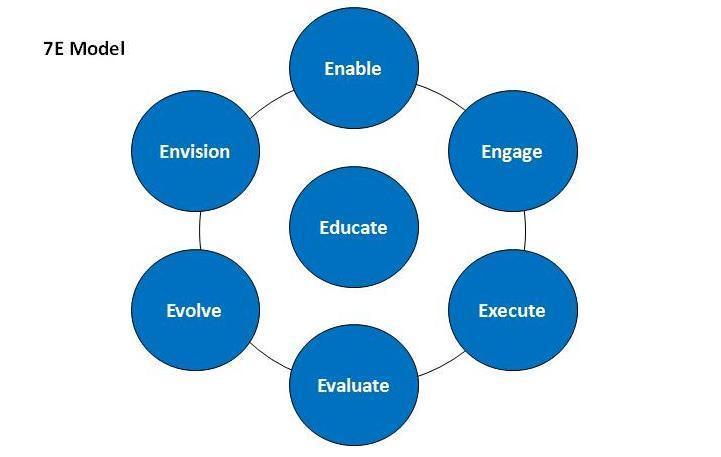
7E Model v1We have made an initial approach to combine Agile Management with these lessons, plus our experience into what we call the Agile Elephant 7E Model

It has 7 major components, and, as is the rule with all good consulting models, it is alliterative 🙂

The phases are shown in the cycle diagram above, and in summary are:

Envision – Understanding the factors driving the need for transformation, and describing the post transformation business and model.

Enable – Put into place the resources, processes, plans, ROI’s etc. that will make the transformation possible.  Also decide how/where it will be executed initially.

Engage – Get the people involved and onside, trained and ready to make the transformations happen.

Execute – Break the transformation into bite size pieces, and execute using an Agile methodology.  Pilot!

Evaluate – Continual examination of what works and what doesn’t, to drive dynamic change and improvement and optimise efforts.

Evolve – If things change, or don’t work, then plans need to change.

Educate – Educate, Educate – this is central to the whole process, from the envisioning process through training the teams, continuous learning, capturing information, evaluation and re-envisioning the transformation where necessary

It’s a cycle to demonstrate that continuous and cyclical iterative nature of the process, but also to note that the central hub is Education.

In more detail for each area considered:

Envision

The aim is to create a vision of the future that the project will aim at, as a guide to what is in the right direction and what is a diversion.  Part of this is the creative, no holds barred brainstorming/thinking out the box/lateral imagineering etc. visioning, but part is the testing of this against the pragmatic reality, i.e.:

  • Understand emergent market situation
  • Understand economic drivers of the industry & company
  • Understand impact of new tools & techniques – and their limitations
  • Define new business approach & model (we use the old McKinsey 7S model as it looks at both hard and soft issues)
  • High level economic analysis (Value analysis, set high level strategy to achieve this)

The endgame is a vision that is transformative, but bounded in the reality of the achievable, and ensuring each actor’s part in (and reason for the part) is readily understandable.

Enable

Before jumping into the Agile mode of actually executing, it is critical in any change management process to set up the support infrastructures, especially:

  • Map existing business processes in detail so everyone has a common view of what is actually going on
  • Create a more detailed exposition of the new business model, and how it impacts what exists
  • Define the who/what/when/where will carry out the transformation
  • Define ICT tools to be used, and how they will be implemented
  • Create programme and project plans, at least to an initial iteration.  Yes they will be wrong, but they need to be a “best guess”
  • Define where and how the Pilot will take place
  • Create business case & ROI – no serious business will commit serious resources without one.

As General Eisenhower noted in Word War 2, about the Allied landings on D-Day – Plans are worthless, but planning is everything.

Engage

Before taking any initial steps of actual implementation it is essential to start to bring people on board, to gain support, neutralise opposition, and create a climate for change.  Key steps are to:

  • Understand current skills mix and staffing profile…
  • ….and what changes are required to these.  You need to know what resources you can afford to lose, and what must be retained
  • What approaches will be used to engage staff, get buy in for change…and protect the involved
  • …and where/who the barriers to change are, and what can be done to mitigate these
  • Define new ways of working, new styles of behaviour required, Training / Education
  • Recruitment / retrenchment plans (if any) need to be carried out humanely – and quickly
  • Define the “Shared Vision” – what it is that will unify everyone’s efforts, what people need to do about it, and why it is essential.  As Denning notes above, it has to be a storyline, shared every which way and not a top down dissemination of vague nostrums.

In short unless a critical mass has bought into a “Whats in it for me” and believes they will be OK in the New World, and the major blockers are neutralised, the project will probably fail before its begun.

Execute

The “Go Do” phase – first for the Pilot, and then the Roll-Out:

  • Train & Educate for Agile approach – Agile approaches are probably the best when dealing with hard to quantify/not done before/high iteration work
  • Break project plans into appropriate size work packages as per the methodology
  • Execute Programme via Agile Sprints/other approaches (most Agile approaches use small incremental “sprints” of functionality development, in frequent drops, which – usually – are easy to absorb incrementally.  Usually. Sometimes there has to be a singular “get the system to this state before we cut over” and its important to identify those).

But there also needs to be an override to make sure the “sprints” are going in the correct direction rather than all over the field, key tasks will be to:

  • Define Key Performance Indicators (KPIs) that each work package is required to hit to be accepted
  • Conflict/Resource resolution
  • Priority setting when there are multiple operations and limited time/resource (the norm for all organisations in the real world)

Evaluate

Just as there is iteration in the Execution phase, there needs to be an iterative Evaluation phase, incorporating:

  • Progress reporting data generation
  • Impact assessment – actual v planned
  • Quality Assurance
  • Human factors impacts
  • Cost monitoring

At a minimum it measures actual vs predicted, and some form of examination into the “why” of any major discrepancies, to predict future problems so the surprises are seen as soon as possible.  Given a Transformation project will, by its nature, not go according to plan it is essential to accept this and have a strong acceptance of the need to adapt.

Evolve

This process looks at the tasks as they are executed and examines “what works, what doesn’t” and sets up the changes to define “whats next?”:

  • Review process – what works, what doesn’t & why
  • Are the tasks moving towards the strategic goals? Are those goals still realistic?
  • What still needs to work even though it doesn’t?
  • What has changed?
  • What is no longer important?
  • What is now important/urgent?
  • What’s next?

There is some criticality in the frequency of these reviews – Weekly/Monthly/Quarterly/ 6 monthly/ Annually – too frequently and the execution phase is overwhelmed by producing reports and interference, but too rare and major problems can sink a project before they are even surfaced.  There are quite a few useful lessons and approaches from Lean operations that can be used.

Educate (Educate, Educate)

Essential before the project, during the project, after the project. Some key requirements in each phase are:

  • Envision – Basic education of senior team, core project team; key organisational players
  • Enable – Educate wider group involved in process mapping and new process design
  • Engage – Education and communication throughout enterprise
  • Execute – Training
  • Evaluate – Understanding of data, what it means, how to analyse it
  • Evolve – Training in analysis and decision making e.g. Value Analysis, Continuous Improvement etc.

Continuous Learning is necessary in an environment where change is the constant.  What is learned throughout any cycle is re-diffused back into other areas – it is continuous.  Learning by doing becomes a continuous loop.

End Notes

And remember, to quote that great sage of complex project execution, Norman Augustine of NASA, that at all times the chances are that things will be worse than planned:

Ninety percent of the time things will turn out worse than you expect.  The other 10 percent of the time you had no right to expect so much.

…i.e. put in contingency.  Even Agile is not immune to this, to paraphrase Augustine again:

Rank does not intimidate systems.  Neither does the lack of rank.

So in summary, we see a lot of the discussion around Digital Transformation putting too much emphasis on technology, or on organisation change, or on an approach that adds digital as an ingredient, rather than recognising that change will be necessary across the whole of the business and the business processes.  We see an agile management approach as the only one that is viable, but it needs to be addressed holistically.  That’s why we are recommending the 7E methodology, and why education, at all levels, is the lynchpin to successful change.

Share this:

  • Tweet
  • Email

Filed Under: agile business, change management, digital disruption, digital transformation strategy, social business Tagged With: Agile, agile business, change management, digital transformation, digital transformation office, digital transformation strategy

Crossing Chasms and Digital Waves

August 21, 2015 By Alan Patrick

Crossing Chasms and Digital Waves

The Chasm

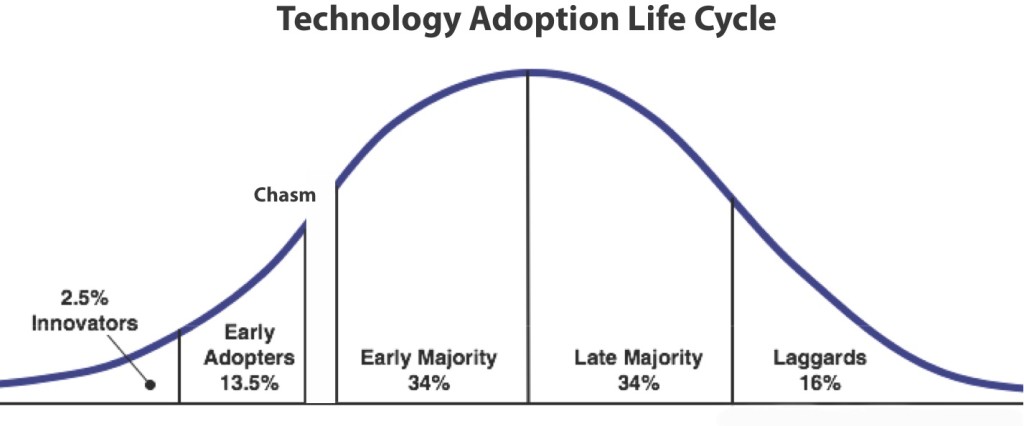
I came across this rather hopeful blog post from 2010, about how Enterprise 2.0 (remember that) had crossed The Chasm (The Chasm) being the gap between an early adoption technology and one that starts to go mainstream in a Technology Adoption lifecycle (see above diagram). Most New New things crash in the Chasm, however, survival rate is quite low. Broadvision’s Pehong Chen wrote a more considered piece in 2011 in Forbes, noting that for Enterprise 2.0, the Chasm was far from crossed:

Consequently, platform of engagement participants must thrive to be proactive, engaging in multiple activities in parallel to reach maximum geometric scalability, such as:

  • Assemble and sustain a critical mass of active members across and beyond the enterprise.
  • Build out an ecosystem of networks and communities by these members, for these members.
  • Establish meaningful social business connections amongst themselves.
  • Integrate fully into all aspects of systems of record.
  • Maintain a reputation economy so that everyone is incentivized to contribute ideas and share knowledge at all times.
  • Follow all relevant activities by anyone, from anywhere, at anytime.
  • Zoom in on any actionable items timely and collaboratively.

For platforms of engagement to succeed is to transform everyone’s entrenched work habits from reactive to proactive and from linear to geometric, which is not a trivial feat by any means. But only when we cross that chasm can our platform of engagement be adopted as the essential second element in our workplace.

By 2012 Enterprise 2.0 had been re-branded Social Business (always a worrying sign, normally that a Chasm flight has been attempted and failed) and, fast forward to early 2014 and the Dachis group, which had bought up many of the emerging first wave Social Business players, had shut up shop, and it seemed the Chasm had claimed yet another New New Thing.

Or had it?

Digital Transformation

The Chasm has another name, garnered from (if I mix metamodels) the  Gartner Hype Curve – it is the Trough of Disillusion that signifies the fall of the overhyped object. What is also interesting is that the Gartner model shows what happens after the crash into the Chasm – that the components are re-assembled in new ways, those that didn’t fly are rejected, new components are inserted and a new, more useful approach emerges.

In Tech, this re-shuffling often comes with a name change, and Enterprise 2.0 became Social Business. However, it also became increasingly clear that these technologies are part of a larger emerging IT infrastucture layer, which some call the SMAC (Social, Mobile, Analytics, Cloud) stack. It has been apparent to us for some time that all these technologies are stronger if combined, we are seing for example the increasing need for mobile and analytic elements for social tools, and clearly the ability to provision them via cloud services increases flexibility.

This overall stack is incraesingly being termed Digital Transformation, but we think that is a slight misnomer as Technology itself never drives Transformation. Transformation is a s much a human process as a Technoogy one. To effect Transformation requires addressing of the “Hard” and the “Soft” processes in the entity being transformed. For this raeson we have long adopted the McKInsey 7S model, as it looks at both the “hard” business ares – strategy, systems, structures and the “Soft” ones – Skills, Staffing & Style and recignises the whole approach is underpinned by the common culture and goals that allows co-ordination without continual reference to high level decision makers – the Shared  Vision.

The Digital Wave

Transformation does not happen in a vacuum. Transformation happens in the context of greater forces. In terms of Techology, it normally creates new ecenomic fault lines, which are arbitraged by new plays. This in turn drives social, buisness and regulatory reactions.  Some believe these changes happen in waves (like Kondratieff) some see change happens in cycles (e.g Schumpeter), some in a combined form of the two (eg Perez). We are agnostic as to whether you call it a waveform or a cycle, but we are certain that something extra and different is happening now.  We’ve been used to technology disruptions happening in regular cycles, but a number of things are coinciding to increase the amplitude – multiple technology disruptions happening together, and those are sitting on top of global economic factors that are changing the supply chain and business models as well.  The “Digital Transformation” people are talking about is happening within the context of this bigger shift that we call the “Digital Wave” (see a summary of our thinking on this over here).

The view from the Summit

All this brings us to explain why the themes are what they are for our London Digital Enterprise Summit on October 22nd, see details over here.

We will also be running a workshop the day before the Summit where we will spend the time looking at the detailed components of what is happening in the Digital Wave, and what an Enterprise should do to surf it rather than be rolled under by it. Key issues to understand include areas such as:

The underlying technologies driving the digital wave

  • Cloud
  • Mobile
  • Analytics
  • Social
  • Localised production

The overlying economics and sociological drivers

  • Human capital – ageing OECD, youthful Developing world, an era of migration
  • Offshoring vs Re-shoring
  • Where’s the money – literally. Changes in funding and financing

The Future of Work

  • Full Time vs Part time
  • Restructuring Organisations – efficiency vs responsiveness
  • The Office of the future – will it exist

We’re covering all of these themes and more in the Workshop and Summit with some great speakers and case studies  and we’d love you to come along and join the debate.  Signup here.

Share this:

  • Tweet
  • Email

Filed Under: #EntDigi conference, digital disruption, enterprise 2.0, social business

Everyone’s talking Digital and it’s Dangerous

July 10, 2015 By David Terrar

Everyone’s talking Digital and it’s Dangerous

Everyone’s talking digital – either disruption or transformation and it’s dangerous.  Plenty of books with digital in the title and that’s dangerous.  Plenty of events around the digital topic and that’s dangerous too.   It’s dangerous because this is too important a topic to be diluted by being overhyped.  We’re actually talking about business survival in a World where the only constant is change, and that change is accelerating.  So where are we at and what can you do to make sense of the hype?

First, we’ve been talking digital since Nicholas Negreponte published Being Digital and Don Tapscott published The Digital Economy 20 years ago, but things have really come together over just the last few, and the disruption and transformation messaging has got loud in just the last one.  Loud enough so that John T Chambers, who is about to step down from Cisco after taking his company through another major reorganisation, told the 25,000 attendees, customers and prospects at his last big event:
“Forty percent of businesses in this room, unfortunately, will not exist in a meaningful way in 10 years,”
and then telling them 70% of companies would “attempt” to go digital but only 30% of those would actually succeed.

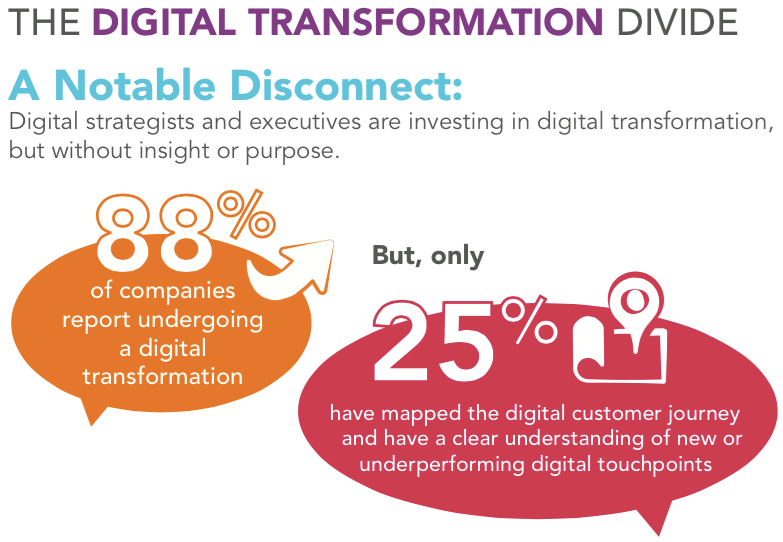
That matches up with Brian Solis highlighting the digital transformation divide in his review of the year back last December:

Banners_and_Alerts_and_infographicthe2014stateofdigitaltransformationaltimetergroup-141020120910-conversion-gate02_pdf__1_page_
Around about the same time, Ray Wang of Constellation Research (who has written one of the essential, recent books on the topic – see later) started a blog post:
“The stage is set for Digital Transformation to be one of the hottest trends for 2015.  Market leaders and early adopters have already embraced the movement.  Yet, massive hype is coming soon as digital transformation hits mainstream awareness by late 2015.”
And let me add something from a diginomica piece by Stuart Lauchlan from last week.  He reported on Jack Ramsay, Global Technology Delivery Director at Accenture Digital Business Group, who delivered his own digital strategy in a keynote during London Tech Week:
“What I still see is a lot of companies saying digital is going to be important. My point is is that digital is not going to be important, it’s going to be everything. If you don’t get that and you don’t get that quickly, then it’s going to be a problem.”
Put all of this together and something very dramatic is happening, it’s accelerating, and it’s being hyped.  How do we make sense of it?  How do we pull all of these threads together and figure out how to compete, how to create value, how to ride the wave of these forces?

You need to get educated, you need to figure out what works, and what doesn’t and you need a plan.  To get educated, here’s a definition of digital transformation, and out of the many books around the subject I’d like to recommend 2….

Leading Digital by George Western, Didier Bonnet and Andrew McAfee.  They highlight how large companies in traditional industries from finance to manufacturing to pharmaceuticals are using digital to gain strategic advantage.  We need to get practical, and these ideas help.

Disrupting Digital Business by Ray Wang where he explains how we should focus our attention on experiences and outcomes. Check out his sequence of articles that summarise the key messages in the book and you’ll want to buy it to learn more.

Then to help you figure out what works, what doesn’t and to formulate a plan, we’ve put together an event with our friends at Kongress Media.  On October 22nd we are co-producing the 2nd edition of the Enterprise Digital Summit London at The British Academy, 10-11 Carlton House Terrace.  We will be addressing the mindshift required and the management challenges of making this digital transformation work end to end in your business.  We will cover the  digital topic and social collaboration techniques, but our emphasis will be on the employee, customer, partner and stakeholder behaviours you need to encourage and the issues of management and corporate culture that you need to address to put these new technologies to use.  Let me talk through some of the great speakers we have on the agenda.

The opening keynote will be from Stowe Boyd.  Stowe’s a futurist, researcher,  a bit of a maverick and describes himeself as an edgling.  He has been helping us make sense of technology and how it affects the world of work for decades.  He coined the term “social tools” in 1999 and the term “hashtag” in 2007.  We are delighted to have his insight kicking things off.

Our second keynote is from Vlatka Hlupic, Professor of Business and Management at Westminster University.   Last year she published a book called The Management Shift on her research from over 20 companies who have been using her approach and leadership model. They are from small to large, in various sectors and include a FTSE 100 Company.  She’ll be presenting her model of 5 levels of emergent leadership.

We have practical case study stories from Vodafone and Pearson, and a great collection of industry speakers and commentators.  Along with those speakers there will be some great panel discussions, and the chance to participate in a number workshop sessions around  transformational change management, digital workplace management, community management and adoption of social tools.

If you are interested in joining us, cutting through the hype and broadening your mind around digital, then go here for tickets and full details.  All this talk around the “d” word may be dangerous, but it’s essential.

 
(top image from Altimeter 2014 State of Digital Transformation images on flickr)

Share this:

  • Tweet
  • Email

Filed Under: #EntDigi conference, digital disruption, events, social business

CeBIT SBA keynote – Strategic Building Blocks for your  Digital Transformation Strategy

March 19, 2015 By David Terrar

CeBIT SBA keynote – Strategic Building Blocks for your Digital Transformation Strategy

As my last post explained, I was privileged to do the opening keynote, substituting for Dion Hinchcliffe, at this week’s Social Business Arena at CeBIT 2015. The theme of the show was social as the enabler for digital transformation. I expanded on a session I did at the Enterprise 2.0 Paris Summit with some additional material on our 20 year journey in to a “world gone digital” since the publication of Nicholas Negroponte’s Being Digital in 1995. I added some Dion slides (but avoided doing a Dion impression) to explain the challenge that the typical CIO has dealing with legacy IT, edge IT and the shadow IT that is happening because their department isn’t being responsive enough.

We are living through a time of immense disruption. We explain it in the presentation as the Digital Enterprise Wave. IDC calls it the Third Platform. Gartner calls it the Nexus of Forces. It doesn’t matter what we call it, but it does mean that everyone’s business model is under threat. You need to transform, but how do you do it? First you have to get educated, and I suggest 3 books you might read covering the global forces at work, the management shift required, and the kind of leadership that organisations need to adopt to start real, digital thinking. Then I’ve added in our definition of Digital Transformation.  There are several you can find (that I link to in my definition blog post) but we believe there are key ingredients missing from some of the explanations you can find.  After that I work through 8 strategic building blocks you need to address to form the basis of the change that your organisations needs to go through. One important factor I bring in that is usually missed by so many is creativity. When we live in a world where content can appear to be free, or we can use low cost resource, or Amazon’s mechanical turk, competing with commodity ideas on price just won’t cut it. More than ever we need to be teaching our kids, our employees, our managers and leaders thinking skills, and we need to make our organisations live and breathe creativity. When your business is under threat and needs a reset, new ideas are the weapons that you need to make progress.

Here is the audio and slides from Monday’s keynote. They did video me, but I guess I was probably jumping around on stage in too animated or distracting a fashion. It was a blast – hope you enjoy it.

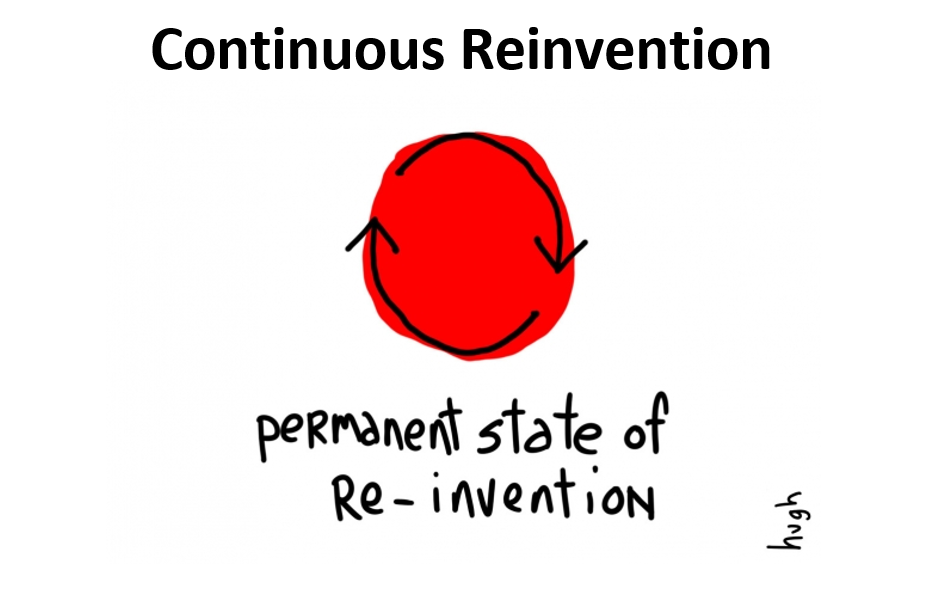
So my core message is that the most important of the 8 blocks is that you need to change your and your organisation’s mindset to a permanent state of re-invention.


Continuous Reinvention

Share this:

  • Tweet
  • Email

Filed Under: digital disruption, enterprise 2.0, social business Tagged With: creativity, culture, design thinking, digital disruption, digital transformation, end to end, leadership, social business

« Previous Page
Next Page »

Sign up for our regular Agile Elephant Newsletter - news, posts, ideas and more.

My Tweets

From the Agile Elephant Blog

  • The Metaverse doesn’t exist yet, but…
  • Impossible Things get Disruptive
  • Clarity, Cloud, and Culture Change at IBM

What Next?
Take a look around our site, check out our approach, see how we can help, join the conversation on our blog or contact us to find out more.

About Us

Agile Elephant is a new kind of consultancy designed to help companies embrace the new digital culture of social collaboration, sharing and openness that is changing business models and the world of work.

Contact us to find out more!

Our founder's blogs:

broadstuff

@DT on Medium

Technotropolis

Our blog:

The Agile Elephant Blog

Site Log In | Site Log Out

Subscribe to Site RSS

Subscribe to our Blog via Email

Enter your email address to subscribe

Join 30 other subscribers

Copyright © 2026 ·Streamline Pro Theme · Genesis Framework by StudioPress · WordPress · Log in