Agile Elephant making sense of digital transformation

innovation | digital transformation | value creation | (r)evoloution

  • Email
  • Facebook
  • Google+
  • LinkedIn
  • Twitter
  • Home
  • Manifesto
  • Services
    • Our Approach
    • Our Services
    • Making Collaboration Work Packages
    • Collaboration Solutions
    • Our Experience
    • Workshops
    • Innovation
  • About Us
    • The Team
    • Why we do what we do
    • Why are we called Agile Elephant?
    • Our Partners
    • Our Clients
  • Get Involved
    • Events
    • Meetups
    • Unconference
    • Newsletter
  • Resources
    • What is Digital Transformation?
    • What is the Digital Enterprise Wave?
    • Our Research
    • Case Studies
    • People We Follow
    • Articles & Links
    • Books That Inspire
  • Blog
  • Contact Us
Home Blog
Agile Elephant at Enterprise 2.0 Summit Report

February 17, 2014 By David Terrar

Agile Elephant at Enterprise 2.0 Summit Report

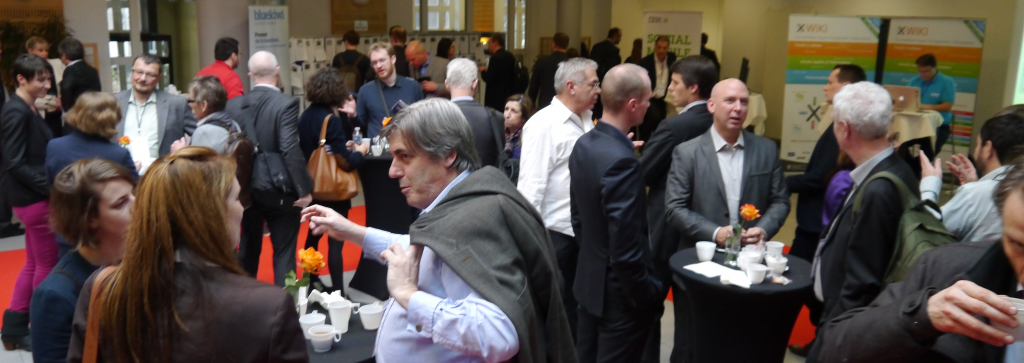
My first post introduced the Enterprise 2.0 Summit, the social business topic in general and speakers at the event at ESCP Europe.  This is my conference report.  I’ll start by setting the scene with my impressions, then pick out highlights, draw some conclusions and finally link to the other Agile Elephant posts about the Summit.

IMPRESSIONS

  • From where we were in 2006 at the Office 2.0 show or in 2007 at Open Knowledge’s first Enterprise 2.0 Forum in Varese, I could be depressed that we aren’t further forward with enterprise 2.0 and social business.  However, that’s more to do with the fact that we are in the middle of a change in business behavior that may take 10-30 years.
  • I’m incredibly optimistic about what is happening now. That’s why we just made a leap of faith and started Agile Elephant as a new social business consultancy a few weeks ago. The mood at the conference confirmed our feeling that this topic is poised to cross the chasm and go mainstream.
  • Enterprise 2.0/Social Business is a complex topic. The elephant in the enterprise room. There is a definite divide in thinking between two camps. Those of us at the summit who want to get top down executive commitment and a focus on hard business numbers and real ROI, versus those that focus on the culture change required to move to a more sharing, open business combined with the structural change required to move companies to more networked rather than hierarchical organisational structures. Both of these are important. Both of these require new or different leadership thinking.
  • Most of us attending the conference are somewhere at the leading edge of this topic. As a movement, we need to get organised to spread the word and break through to the average business person in the average company so they understand the benefits of social business.

CONFERENCE HIGHLIGHTS

Dan Pontefract of Telus opened the conference eloquently explaining his company’s journey in to social business.  Key things he said or described:

  • It’s not the tool it’s the behaviour
  • It’s about collaborative behaviour aided and abetted by social tools
  • A woman adding a 6 minute video to the community of her 10 coaching tips, it got 1000 hits and 62 comments, and she answered every one individually
  • He used a metaphor of Canada geese flying in a scheme, a V formation, rotating the leadership – our orgs need to be like that
  • There is potential energy in everyone, how do you convert that in to kinetic energy?

Jon Mell of IBM called out to me from the stage remembering Varese 2007 making the point we’ve been at this a long time.  Some key things he said

  • Think of the best manager and the worst manager you’ve had, and that their good/bad behaviours aren’t easily found on their CV
  • That means when you’re hiring someone, how they might fit your culture can’t be see on a CV
  • He explained how Caterpiller have seen that where employees are highly engaged, there are 3 times less accidents and that translates straight to the bottom line
  • He talked about AMC – they focus on popcorn sales as a key metric – what makes great popcorn sellers, and good managers of popcorn sellers, how do we hire and attract them, share the learning – getting it right translated in to a 1.2% increase in profit per customer

The best case study at the summit was Joachim Heinz explaining Social Business @ Bosch.  He explained how they have 300,000 associates, create more than 16 patents a day, have been taking Bosch to 2.0 and now have 60,000 people on boarded to their social platform.  80% of their communities are open – you have to apply for a private group.  It’s called Bosch Connect – you can “go there, make a wiki and you’re done in 30 minutes”.  They have created 13 different use cases and he explained they are:

  • Shifting core processes in to social
  • Using social to enable leadership
  • Providing senior managers with Enterprise 2.0 mentoring using digital natives, but they are discovering that ideas are going both ways, it’s not a monologue
  • And that the wake up call for Bosch management was the fact that Tesla could design a new car in 2 years, whereas BMW/Mercedes take 6 years – that’s digital disruption!

Emanuele Quinterelli of Ernst & Young, who I first met when he invited me to speak at that E2.0 Forum in Varese in 2007, set the scene for our panel discussion on Strategic Enablement.  He presented the results of their survey of 300 Italian firms where 54% of them have between 10% and 30% adoption of social business.  He presented the 6 key findings:

  1. Top down commitment – if top executives are on board, nobody in middle management can sabotage the shift to social business – a very tough but crucial message
  2. Strategy – a well structured roll out strategy is key, hybrid works, but top down is 2 times more successful in achieving adoption
  3. The people factor – laggards tended to have no-one in charge of collaboration, leadership of collaboration works
  4. Money where it matters – the leaders had budget balanced between strategy, tech and change management, and 50% more than others
  5. Measurement is important to steer and sell it – half of laggards have no measurement at all, 91% of leaders have measurement in place, top performers use business metrics 3 times more
  6. Social business is here already – leaders are engaging employees to engage customers, internally and externally – 23% of the top performers are planning end to end social business projects in the next 2 years

Martin Risgaard Rasmussen explained the Grundfos story, but also that he is in the process of leaving to join Yammer.  Grundfos has been around since 1945, has 18,000 people and is the World’s biggest pump manufacturer – take a look at your central heating system next time you open the airing cupboard.  They have deployed a program of culture change they call Global Working Culture run by HR.  They are moving to social business to get more out of the work they already do.  It’s all explained in a brilliant hard copy white paper called “Social Business Cooking at Grundfos”, there is more at socialbusinessjourney.com, and I’ll post a link to a PDF when I find one.  Some of the things Martin said:

  • Participation inequality, the 1-9-90 rule is real
  • You need at least 1 designated community manager otherwise it won’t work
  • He emphasised the importance of a clear purpose and finding use cases
  • He explained how they integrate social into their business process
  • They focus on culture
  • He talked Simon Sinek’s Start with why (and we love that!)
  • He explained how they looked at Chatter, Yammer, and Socialcast, but chose Yammer

Joachim Niemeyer of centrestage talked about leading the transformation required.  He talked about needing the active support of top management, the need for a clearly defined target audience, about capability, having a clear vision, defined business objectives and a well developed roadmap.  He highlighted the importance of use cases with high potential business value and a toolbox for systematic change.  He was another one who emphasised integration in to business process.

I missed Claire Flanagan of Jive talking about proven social business adoption strategies, but her slides have some great messages

I missed great presentations by Rachel Happe and Jane McConnell too.

On day 2, Lee Bryant of Postshift said a lot I could agree with, and some things I might argue with.  He doesn’t agree that social business should be about process.  He worries that some of us are adopting an approach that is all about a market for consulting services and software, that’s aligned to the way companies are used to buying.  He worries that the approach is not about new business models or new types of organisation.  He talked about killing the org chart with social tools.  Some of the things he said:

  • We’ve move beyond Taylorism – productivity has gone quantum
  • He talked about the effectiveness of small co-ordinated, agile teams
  • Knowledge sharing beats cascaded best practice
  • He worried that so many companies have too many generic managers – they don’t have skills, they’re just politicians
  • Communities and networks are the fabric of the organisation (right on!)
  • He quoted our friend Dave Gray‘s The Connected Company – popular working needs an underpinning service, as well as about fractal structured organisations
  • He went through a selection of companies that have adopted a completely different, often decentralised organisation and leadership approach – including Morning Star, Valve, Kyocera and one of my favourites WL Gore
  • He talked Holacracy, Sociocracy, and the Kotter dual operation system
  • He talked agile work group of 5-8, then Pod groups of 12, then group of pods totalling 140 (see Alan’s recent post on Dunbar numbers – there are more than one!)
  • He mentioned how you need an influencer, a keeper of stories – like Marc Benioff who is brilliant at that
  • He referenced the fantastic changes that the UK’s Cabinet Office have done reorganising government IT functions
  • He said he wasn’t arguing for flat structures or the end of leadership, but for for the end of managers
  • He also said it doesn’t matter what we call this topic with a slide full of socbiz and 2.0 hashtags (see thesis 9 of our Manifesto)

BernardMarie Chiquet of iGi Partners extended the discussion further in to Holacracy.  He suggested we have to go to the motherboard of the organisation structure (I like that!).  He talked about a move to “purpose driven” not “for profit or not for profit”.  He argued that order doesn’t require bosses.  He talked of needing a constitution for the organisation, like the king handing over power to a new form democracy enshrined in the constitution.  He talked about organising the work, not the people.  He wanted to break down the purpose in to functions and the functions in to roles – that being the basic brick, element where work needed to be done.  He suggested:

  • There are 3 dimensions – purpose, accountabilities, domains
  • You need a governance process – but that might be a 2 hours meeting every 2 weeks
  • It takes a village to raise an organisation with organisation, people and a purpose

At a about this point Jon Husband tweeted “The Holacracy tension a notion that comes from Robert Fritz’s concept of Structural tension, from OD world of the early to mid-90’s #e20s“.  Jon clearly thinks that holacracy is 90s OD and other thinking re-presented for this new century.  He joined the panel discussion, which was really entertaining.  They talked more about the org chart being roles and not people.  They talked about the time span of decision making and how far out you can look for strategic decision making.  We now we live in a World where a few tweets can put your business in deep trouble – difficult to be strategic with change happening in near real time.  Jon talked Transactional Analysis, the book “I’m OK, Your OK” and how the goal is to move from parent-child to adult-adult negotiations.  He believes the next stage of social business is a deep movement, that is a 20-30 year process, but he characterised the stage we are at in the journey by the pilot coming on the intercom and saying:

“Buckle up your seatbelts, there’s turbulence ahead!”

Back in the main hall, Celine Schillinger of Sanofi-Pasteur told the inspirational story of her journey in to social business and being a change agent.  She talked vision, openness, information and cultures.  She explained how things changed for her when she sent an email to her CEO back in 2011 around the issue of gender diversity.  That went viral, and triggered her creating a community on their internal social platform that has grown beyond 2,500 members in 50 countries, with concrete measures to achieve gender balance that changed her company.  She went on to explain how Sanofi are using the same type of community approach to fight Dengue Fever, but lifting it beyond a company initiative to a global fight against the enemy/disease.

Dion Hinchcliffe of Dachis Group closed the formal presentations with a final keynote.  He suggested we should let the network do the work.  He asked if we can apply social business frameworks in most industry sectors, across different geographies, and even differing corporate cultures?  Will they work, will they lower the risk, get faster results, get better results?  He talked about T-mobile cutting customer defections in half.  He talked of advocate programs becoming a major new element of organisation structure.  He wondered who should own the social business topic?  He explained that a framework is a pre-built approach with holes cut out for the details of your business.  He used Rachel Happe’s Community Model as an example.  He suggested that:

  • It’s easier to add social rather than change the fundamentals of the existing systems
  • Business models need to be updated
  • The move to Social Business is inevitable, and a good thing
  • We should take care as it is easy to be far too technology centric

CONCLUSIONS

So, it was a great conference full of good content, strong case studies and inspirational speakers (with only one low point).  My key takeaways from the Summit:

  • There is a shift happening.  We may be in the middle of a 20-30 year change but as a community we can feel the rate of change accelerating and Social Business is set to cross the chasm and go mainstream.
  • For Social Business projects to improve their chances of success we need top level executive commitment – a message that was repeated in many of the sessions.
  • The way to get that commitment is to talk hard business numbers and real return on investment, picking up on the case study stories from Bosch, Grundfos, Caterpiller, T-Mobile and others mentioned at the show.
  • The culture change required to move to a more sharing, open business model combined with the structural change required to move companies to more networked rather than hierarchical organisational structures is crucially important too.
  • The frameworks, techniques and behaviours around community building are still vital to this topic.
  • We’ve been talking social business around CRM for a while.  The talk has shifted to leadership and employee engagement, bringing social business firmly inside the organisation.
  • The enterprise 2.0/social business community needs to take the message to the wider business community.  We need to talk less jargon and more business benefits.  We need a clear message in an easily digestible format.  Social business works and produces real business benefits – let’s get on with it!

OTHER AGILE ELEPHANT POSTS

E2.0 Summit Case Studies – Day 1
Agile Elephant goes Enterprise 2.0 in Paris
Key factors for Strategic Enablement
Day 2 Case Study Summary at Enterprise 2.0 Summit
Employee Engagement : The New Heart of Enterprise 2.0?

And don’t forget Jim Worth’s great wiki resource which lists everyone who tweeted at the event, their tweets, the posts the photos and more.  See you next year?
Share this:

  • Tweet
  • Email

Filed Under: enterprise 2.0, events, leadership, manifesto, social business Tagged With: Bosch, centrestage, CRM, Dachis, Grundfos, Holacracy, PostShift, Sanofi-Pasteur, T-Mobile, Tesla

Day 2 Case Study Summary at Enterprise 2.0 Summit

February 15, 2014 By Alan Patrick

Day 2 Case Study Summary at Enterprise 2.0 Summit

Day 2 at the Enterprise 2.0 Summit, and more case studies. The first session was on enabling output improvement, interesting in that it was financial  services, which has extra issues with the “3 Amigos” – Legal, Security, Compliance

Dan Florescu – ING
Project to increase engagement and collaboration started in 2010, many people only work 4 days a week, some on 3 – need to learn to manage an army of job sharers. Used Sharepoint, not social at time [I can support that – AP] so did mods, which was expensive – later added Sitreon as an overlay. Put system in using scrum approach.

Business aims were to
– enhance profiles with skills and allow people to find the right person easily
– reduce meetings (used online agendas setting and hash tags to cover topics)

Lessons learned:
– Legal, Security, Compliance – the “3 amigos” – very powerful in a financial company. Had a simple user agreement, and a report button to cover these issues.
– Anyone can start a community, but you wind up with a lot of ghost groups. They do a 40 – 60 day clean up – 40 days notification if no activity, 60 days delete
– Had a 25% increase in activity from 2012 to 2013 but need to get more people and doing more stuff to really add value (a critical mass?):
New head of HR – companies these days less likely to listen to bosses, more comms/collaboration/etc needed

Raphaele Naud – Fidelia
Multiple-Site, info in silos, 3000 people, very hard to get info from right person fast. Wanted to centralize info and transform workplace. Choosing tools, used consultants, chose XWiki after an RFP with user requirements – has customisable, good Interfaces. Debut “Wikidelia” 2010, started piloting and onboarding mid 2011, started to adapt system by asking people for feedback, requirements.

KFS for Wikidelia
– critical to have useful information at beginning of system life so first application was online data/document repository
2012 started with community building capability
– management support
– heavy user involvement in task force
– info had to be easy to find information
– must be easy to use or users won’t use, especially to write/add stuff
– set up teams, communicate with managers up front, then all in pilot
– used feedback and learning to adapt and roll out further
– buzz launch – T shirts, info as to where stuff is, SOS helpline, mascot design, then vote

Impacts
– a move from oral to written culture
– had 500 seasonal workers, very fast onboarding
– “un-siloed” the information as it is now held centrally
– now 500 visits a day
– got lots of people getting engaged with helping amend, allowed people to add their own stuff

Now implementing Ideas Box – started off by asking about business strategy issues but
– have a continual operating committee to add stuff, 2 day response to proposals,

Discussion with Dan & Raphaele

Some points:

– Need to understand managers are not as familiar with social as staff are, bigger journey for them
– Banks do have to ensure compliance of documents
– Fidelia uses socnet plus document mgmnt, continual scrutiny
– ING documents are in team databases, socnet only for collaboration

Where the company is making the money, that’s what social should help – motivates managers, makes employees see sense of using system

Benchmarking – did you look at best practice? Managers felt safer if they could see other companies doing it.

Main Success Factors:
– Community mgmnt
– Sponsorship
– Deliver value

The second session was on using social technology to foster innovation.

Mathilde Parlier Blot – Peugeot

Aim was to drive Main driver was not to just stack ideas, needed to make it real, and make it cross discipline
Idea competition – collaborative v competitive balance. – 1000 connected users – predefined deliverables, used gamification and incentives (not sure how). Actions:
– Company wide commas, weekly newsletter, inspiration space with information relevant to competition
– Voting – at least 5 comments to get out of pool for evaluation by specialists
– Got 7000+ uniques, 1300+ participants, 1000+ ideas, 3500 comment prizes – car, health and wellness voucher etc
[AP cynically, gamification means lots of valuable ideas for free, only need to pay for a few]
– 200 useful ideas,

Parallel quick win “Costbuster” idea, shorter/sharper program
– 30,000 + visits, 17000 comments
– 117 Costbusters (short term cost reduction) ideas vs 200 innovation idea
– Euro 40 mil savings

Latest plan – Fusebox – external challenge – 350 visitors to date

Hurdles
– Not Invented Here
– absorption capacity – limit to how much company can deal with
-IP rights
-HR policies at odds with requirements and desired behaviours

Plusses
– break down organisation silos
– higher value on behavioural skills
– customer driven naturally
– positive communications.

Jerome Introvigne – Groupe POULT

It was all in French so its taking me some time to translate it, not a language I’ve ever learned and my Latin doesn’t help a lot 🙂

The following were not strictly case studies, but are notes from an indicative session on structuring Social technologies within the overall business processes

Accenture –  Joao dos Santos

Business Procsss Mgmnt (BPM)  is good for stable, repeatable processes. BPM and ERP doesn’t see Ancillary activities [what I call informal systems spring up to support this], non structured data and non accountable people “moments of truth” decisions

Adaptive Case Management – (ACM) Accenture term = social tech + case management + BPM + Enterprise Case Mgmnt. Case combines events, data,content, people, policies etc. ACM is more lightweight than BPM. It gives you a huge audit trail and traceability from the social data as well

2 Roles of Social Interactions in ACM:
– collaboration drives runtime collaboration, innovation etc – user case management is best tool
– integration with external networks which generates information from market, eg customer complains on Twitter – use various tools for this, open a case to cover eg Twitter complaint

Challenges:
– Need to get closer to beneficiary of the process eg client
– Must be very goal driven
– Transaction drives process, not process driving transaction
– Systems continually self configure.

My take, confirmed by Joao – ACM is aimed at parts of a business with case management potential, eg customer service

Bertrand Duperrin – NextModernity

Requirements
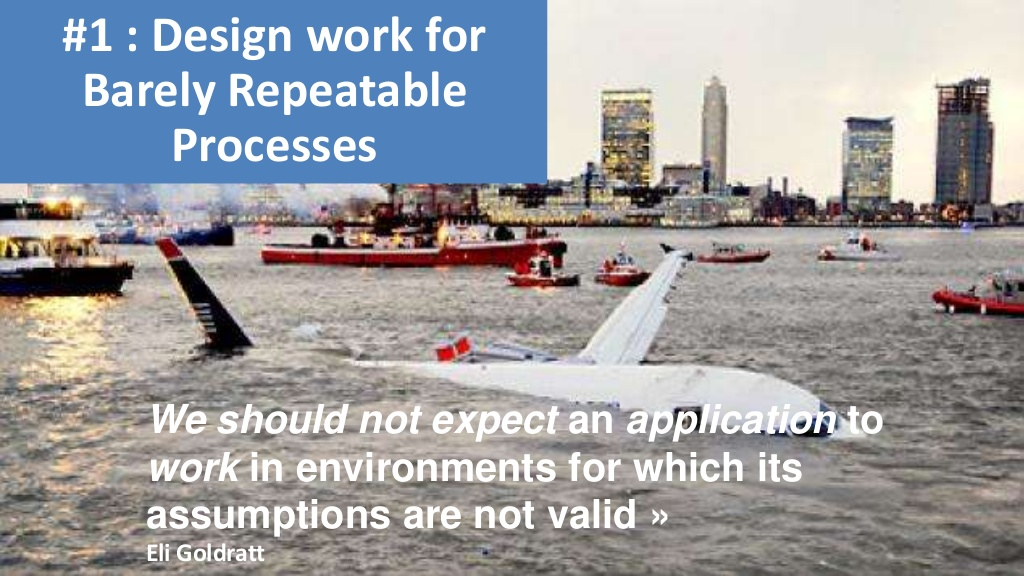
1. Design for BRP ( Bareley Repeatable Processes)
2. Design social for structured activities – how does this tool help me with my business goals, not all your social goals
3. bring social services into context of bus application and vice versa

Challenges
1. It’s not about adding but transforming – but social is very touchy feely, very hard to do predictable, reliably, measurably
2. measuring the impact – don’t know what to measure in social activity, but do know what to deliver in processes – so see how the social processes impact the business metrics
3. managers must adopt not as average users but as managers
4. technology adoption and open standards – yes tech is 20% but it’s the first 20% and really matters.

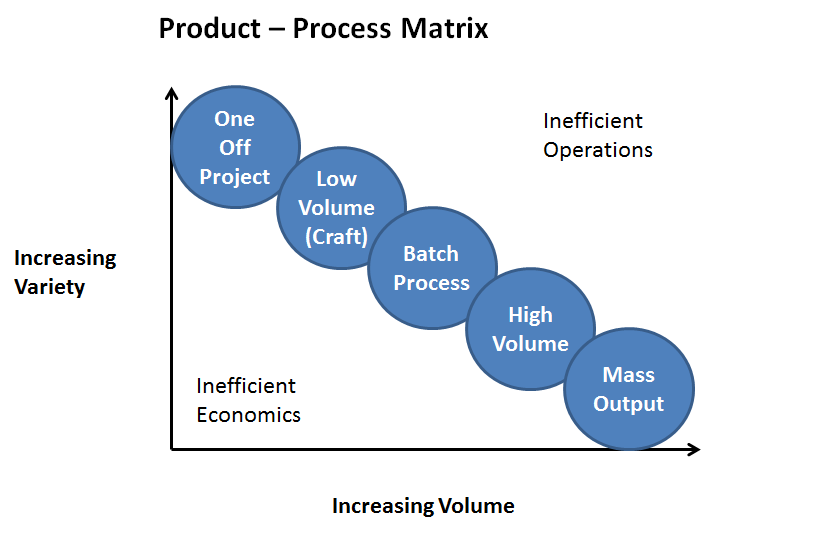
The thing that stood out to me is that Social technologies do not really give any advantage with repeatable processes, they are more effective at dealing with “barely repeatable processes” and unstructured information. The slide I’ve used at the top is from Bertrand’s talk and illustrates this well, with a useful quote from Theory of Constraints originator Eli Goldratt – use appropriate systems for appropriate tasks.  The ERP systems are not going to go away, in my view a similar arrangement will arise where Social technology will be the “mid-range” system between one-off projects and the  main production systems – much the as the product/process matrix works for manufacturing operations
 

Share this:

  • Tweet
  • Email

Filed Under: Uncategorized

Key factors for Strategic Enablement

February 15, 2014 By David Terrar

Key factors for Strategic Enablement

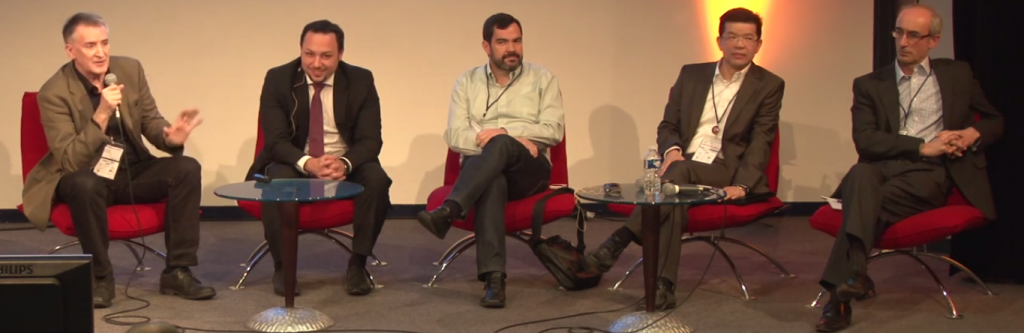
Here is the panel session that I took part in at the Enterprise 2.0 Summit in Paris this week, on 11th & 12th February 2014.  We were discussing the key factors for strategic enablement of enterprise 2.0, social business, and social collaboration in organisations. Emanuele Quintarelli set the scene presenting a survey of Italian firms. Then the discussion, moderated by Bjoern Negelmann, was between:

  • Emanuele Quintarelli – Digital Transformation Practice Leader, Ernst & Young
  • Luis Suarez – formerly Social Computing evangelist, IBM Software group
  • Dr. Chee Chin Liew – Enterprise Community Manager, BASF SE
  • David Terrar – Founder & CXO, Agile Elephant
  • Simon Levene – Senior Strategy Consultant, Jive Software

There was actually some tension between the speakers, resulting in a great discussion.  The tension is between the likes of Emanuele and myself who want to lift the argument to real, hard, business numbers and metrics that the executives in the C-Suite can understand in a business case, versus Luis and others at the conference who want to focus on the culture change required in the workplace, on improving employee engagement, the move to knowledge sharing, open business and collaboration, with use cases that are effective.  Both are important.  But to accelerate things, it’s my belief we need cold, hard business logic combined with the inspiration to change to open business.  Listen to the discussion and you decide.

Here are a few key quotes I’ve lifted out of the dialogue:

“7 out of your 10 colleagues don’t give s#%! about what you do today!”

“need more doing than talking”

“go back to the core nature of how work gets done”

“how can I help you today?”

“but first of all we need to make it clear to the business where is the benefit”

“does management agree or recognise social as an enabling tool for more engagement and to solve the problem of the fundamental (financial) crisis?”

“not happening yet because we are talking about collaboration, we are not talking about measurable business benefits”

“the majority of people in this room are believers in this thing”

“it’s up to us as a community to get out there and communicate it better to the average business person in the street

“it’s all about use cases, if you come up with a list of top 10, 15 use cases of how people work and socialise them”

“break a silo, and you go in to openness and transparency”

My post setting the scene and introducing the show is here, and my conference report will follow shortly.

Share this:

  • Tweet
  • Email

Filed Under: business innovation, change management, corporate culture, employee engagement, enterprise 2.0, events, strategy Tagged With: Agile Elephant, BASF, business metrics, culture change, depression, employee engagement, Ernst & Young, hard numbers, IBM, Jive, Kongress Media, optimism, ROI

Agile Elephant goes Enterprise 2.0 in Paris

February 14, 2014 By David Terrar

Agile Elephant goes Enterprise 2.0 in Paris

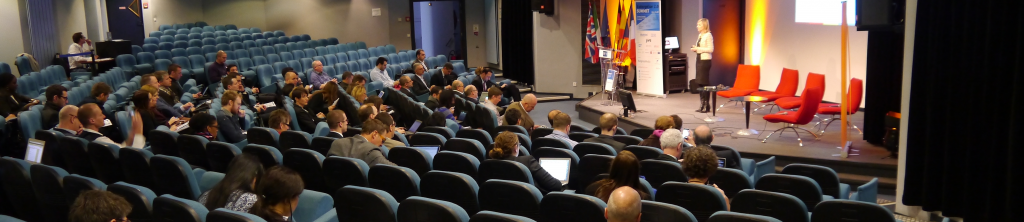
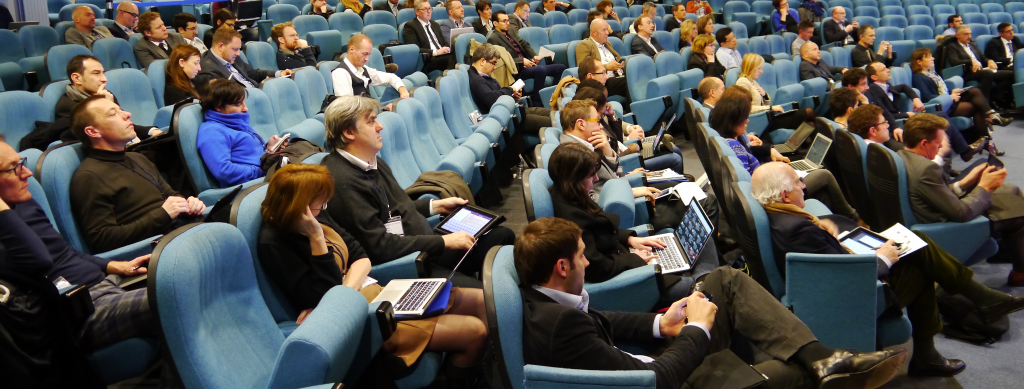
The Agile Elephant team attended Kongress Media‘s Enterprise 2.0 Summit in Paris on Tuesday & Wednesday this week – I was speaking on a panel on strategic engagement and running a workshop session on project management and governance.  Alan Patrick and Janet Parkinson will each be blogging their own thoughts, but this will be the first of two posts from me.  It will be an introduction to both the topic and the event, followed by my conference report as part 2.  We spent the two days at the World’s oldest business school, ESCP Europe in Paris, talking enterprise 2.0, social business and open business… OK, what’s that all about then, and why should you be interested?  Let me start by explaining a little of the background.

Where to start?  Back in May 2006, Andrew McAfee of the Harvard Business School started the wider use of the term Enterprise 2.0 as a kind of business oriented evolution of the web 2.0 term that was around at the time. He defined it as:

“Enterprise 2.0 is the use of emergent social software platforms within companies, or between companies and their partners or customers.”

At that stage, the emergent tools were blogs, wikis, forums, document sharing, RSS feeds, microblogging and activity streams.

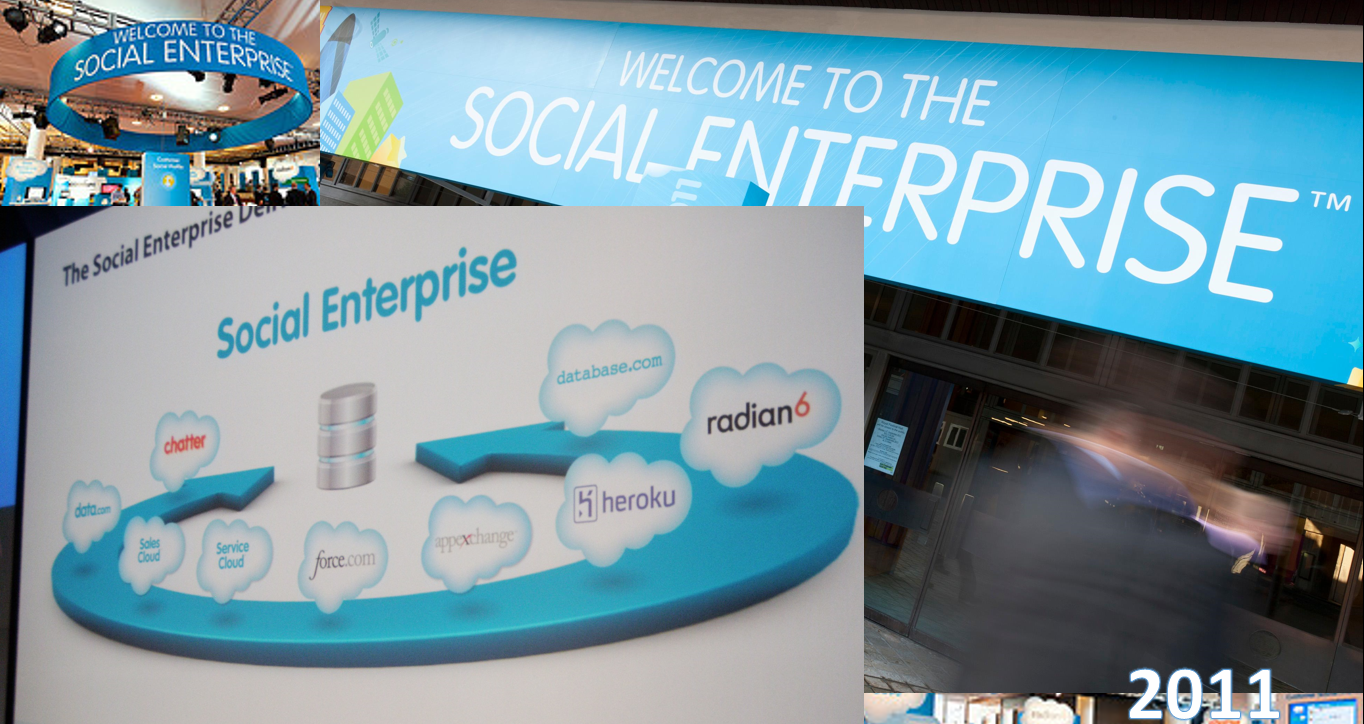
Salesforce London 2011So the term has been around for over 8 years, but during this current decade the concept has evolved, and people have started to use the terms social business and social enterprise instead.  This is problematic as the term social enterprise had already been coined by Professor Muhammad Yunus to mean a business with a social rather than financial purpose.  That didn’t stop Salesforce, in 2011, branding their major customer and partner events with “Welcome to the Social Enterprise” and even trying (and failing) to trademark the term.  Their definition of a Social Enterprise was one where social tools like Salesforce Chatter are used to connect and collaborate in new ways inside as well as outside of the organisation.  These social tools, and there are many of them, can provide a very different platform for teamwork compared to sending files by email, which is the default collaboration approach in most organisations, albeit occasionally modified by having some sort of shared drive or intranet as the file repository.  By 2012 Salesforce had dropped the term, but their shows declared “Business is Social”.

We’ve also used terms like knowledge management, corporate social networking, social collaboration, or social media in business. Social Business should not be confused with the term Social Media, although it uses social media channels. Social Media incorporates social networking, blogging, microblogging, forums, user generated content, crowd sourcing, RSS feeds and more. All of those communication channels might be used in a Social Business approach, but it will involve other social collaboration tools along with a major change of mindset and culture for the organisation. A culture of openness, sharing and collaboration that goes hand in hand with today’s digital disruption.  It’s the antithesis of the old, corporate, command and control hierarchy where knowledge was power, and you were motivated to hang on to information, a valuable currency to keep private for your own use.

Enterprise 2.0, Social Business – part of our current problem is that neither of those terms work well, but the actual concept they are trying to describe can add real value to the bottom line in any organisation.

The Summit had some great speakers – Dion Hinchcliffe from Dachis, Rachel Happe of the Community Roundtable, Dan Pontefract of Telus, John Mell of IBM, Emanuele Quintarelli from Ernst & Young, Bertrand Duperrin of NextModernity, Lee Bryant of Postshift, and Luis Saurez just starting his journey having left IBM only days ago.  It was a packed agenda covering:

  • Success factors for social workplace adoption
  • Key drivers for leveraging social value generation & business transformation
  • Best practices for enhancing business performance and employee engagement
  • Visions for future work & process organization

The event was sponsored by IBM (who have the Connections platform), SAP (with their Jam platform), Jive and a number of other players – Sitrion, Bluekiwi, Xwiki, NextModernity, Lecko.  There might be over 100 social business platforms on the market, some of them are very good, but the players you’ll come across more often with the larger customers or number of implementations are IBM, SAP, Jive and Yammer from Microsoft.

It was great meeting our friends across from USA and Canada, as well as meeting all of the key European social business practitioners in one place and learning from some great customer case studies.  Janet Parkinson, Alan Patrick and I were contributing to the tweet stream at #e20s and flying the Agile Elephant flag.  All of the tweets, tweeters, blogs and photos from the show so far have been collected together by Jim Worth (and the crowd) in this wiki.  Everyone will add links over the next week or so as we all catch up.  Bjoern Negelmann & Thomas Koch, the organisers, and their team did a great job of putting on a very valuable social business event.  Right at the end  Bjoern grabbed me to ask me my thoughts about the hackathon case study I had just presented on behalf of my team, along with my key takeaways from the conference:

My part 2 conference report is here.

Share this:

  • Tweet
  • Email

Filed Under: collaboration, digital disruption, enterprise 2.0, events, social business Tagged With: Andrew McAfee, Bluekiwi, digital disruption, ESCP Europe, IBM Connections, Jive, Microsoft, Paris, Professor Muhammad Yunus, Salesforce, SAP Jam, Sitrion, Xwiki, Yammer

E2.0 Summit Case Studies – Day 1

February 14, 2014 By Alan Patrick

E2.0 Summit Case Studies – Day 1

Case StudiesMy main interest at the Enterprise 2.0 Summit this week was to get down and dirty and detailed in the case studies, as in my view (being an Engineer by training) all the theory is great, but it’s when you try and make stuff actually happen that you get a wholly different level of learning.  We will write the studies up in more detail later, but here are the summary take-aways I took away:

Marcell Tardy – Solvay Pasteur
Used Social tools to foster new culture in post merger integration. Used the 6 weeks leading up to a major all new hands convention to put out a lot of issues into the “digital” air, got all the senior managers involved in answering questions and concerns, so by the time of the all hands there had been a huge amount of discussion and debate. Some key benefits were:
– a lot of the issues were aired, some already defused
– major problems to deal with identified for focus
– process in itself built confidence and communication

Joachim Heinz Niemeyer – Bosch
Bosch see a shift from the mass production to network age and wanted to understand how it works. Initially decided to use Social technology to improve knowledge productivity:
– Wanted more innovation – patents per day
– Faster product development
– Reduce lead time of new plant design & development (got it down from 8 weeks to 8 days)

Lessons were:
– Multiple vectors of change – technology, organisation, culture, leadership, guidelines/principles
– Must infuse openness in the technology
– Onboarding wizard very critical to drive adoption

Then used it in a part of the main operations, for Capacity Requirements Planning. Found the traditional methods are fine for mass production, but not good for rapid reaction to customer service. [AP – I can echo that, which is why so may informal systems exist around the “big” CRP system].

Main benefits were:
– All the “unstructured” CRP data in one place on the social net
– Very wide dissipation of problems – ie visibility [AP – sort of like digital Andon lights – wonder what happens if there is chronic under capacity or serious shortages though, you could swamp a system]

Jean-Paul Chapon – Societe Generale
Approach was based on Pragmatism – meant using open source vs “closed solutions” – preferred open source as they had control of the system, the data and future development (key issues for Financial Service security). He made 2 major observations about the implementation:
– Intranet vs Social Media is like a machine vs a “cafe numerique” – one is sterile, the other is active and alive
– This means  you have to let the adoption mature, it has a settling in period

When asked what his biggest surprise was, he said it was the power of open source software v big players

Martin Risgaard Rasmussen – Grundfos
They have used Social tools for a number of applications, but he notes that in a business dynamic you need a clear business purpose for implementing these technologies:

1. Global Talented Manager program
Used Social tools instead of flying to meetings, ran it 24/7. Moved from Lotus Notes to Outlook in 3 months, deployed staff as change agents to help it along and and used Yammer – no emails – so everyone sees answers. v 1400 people involved. 5 main lessons:
– “Not about tech” – but it is, easy access iPads etc are key
– “Not about features”, but it is -eg used translate functions in global company, very useful
– Communication is important. Early adopters forget how little others know, early adopters can’t articulate benefits well, need to give early majority a “why” to use it – set up “chasm” teams to do this (from jumping the chasm)
– Particpant inequality theory (1/9/90) is real, team needed to seed system for quite some time (cf Societe Generale “maturation” above).
– Integrate social into processes, not processes into culture

Why did they choose Yammer? – evaluated Chatter, Yammer, Socialcast, used Yammer as it was bought by Microsoft – essentially already paid for, and Microsoft has major global support. Yammer is now available in Office 365

2. Moving factory operations
Speaking to Martin afterwards, he mentioned another use, which was to use Yammer to pick up all the to’s and fro’s around a factory move – this I can understand, as I was using Social tools most recently to co-ordinate the spares supply and  service issues around setting up and maintaining multiple complex machine tools in multiple locations. Both are examples of a large number of what Sig Rinde calls Barely Repeatable Processes

Joel Framont – LaFarge
Used Social technology to transition brand from product to service by crowdsourcing advice and “hat works2 from across all their areas of operation:
– Used LO Village – 1000 communities, 10000 employees on so far
– ROI – get strong interactions between countries share local answers. Initial step was to measure involvement,  and then develop platform (IT not best at guessing what users want) to improve that
– Used PWC via LaFarge Innovation dept – aim was to get work done faster so needed extra hands/skills

Noted that you need different abilities for handling B2B, B2C and B2E  (employee) environments [AP – agree;  see our manifesto Thesis 3]

Olivier Amprimo – L’Oreal
Aim was “digital proximity” with the customer. Wanted one platform to keep all knowledge common to all was a key business value. (Notes you have to understand corporate culture and select a technology in line with culture).  Implementation was over 15 months:
– Employed virally
– Encouraged robust projects
– Focus on building self help communities
– Activated the water cooler (didn’t say too much on how they made this work)
– Facilitated team meeting

Monitored and assessed growth, key thing the implementation team had to learn was to “densify the network” and  serve as examples (I think this is a common thread in these studies) as well as – handle objections. Another lesson he reiterated was that Social technology has to be efficient. How to get internal “digital proximity” – sit with the people, knock out the obstacles, eventually you get a systemisable approach (cf JiT idea of removing the rocks in the flow, also my notes on Allen’s Law ).

The next challenge after implementaion was to embed it in the organisation, this requires a different set of activities
– Get robust governance at a key point in the project to systemize it
– Integrate with workspace – get the “official nod” from formal and informal major players
– Take advantage of intranet revamps, cost justifies the Social tech and highlights how old style intranets will only manages structured data

Major Lessons
– aim for areas in business where value is created
– need a culture where failure is allowed

Nina Sonne Nikolaisen – COWI
Engineering design company, main output is drawing and papers. 6000 employes globally. Sees social tech as a collaboration project to:
– improvement in performance
– speed

Design specs for Social technology:
1. Tool must support business needs and ways of working
2. Used to use files on spread file drives, share stuff by email and FTP – hard to keep track of latest versions etc
3.  But needed to get skills of people across world – old approaches very poor with global teams

Solution was a collaboration platform. Everyone had MS Lync already. People liked it, were used to it, so they used that.  Lessons were:
– Must support business need…
– ….but must be something in it for user
– Management force (cf Governance above) by not allowing old platforms to expand, or other new platforms to be bought

Metrics – not just people but also speed to save, access to new external user 4min down to 20 secs
– Initial metric – project sites and data volume on new system – 48000 project sites, 7 TB of data
– Now is one of most business critical IT systems in company

Next step – faster document management, client collaboration, reduce IT costs

I asked Nina afterwards about CAD data, as my experience is that it is really hard to integrate this as the files are huge, very different to anything else and the need for version control is absolutely crucial.  She said that they had not yet managed to integrate it at a technology level but responsibility for CAD configuration management now rested under the same team who had responsibility for all other main databases (CAD in my experience is often separate under Engineering).

Sadly I can’t find my notes from Juliette Girard of Renault Consulting, will carry on digging….

Day 2 will be in a separate post and I’ll draw some conclusions but there are some common threads.

Share this:

  • Tweet
  • Email

Filed Under: Uncategorized

Thesis 3 – There are no one size fits all solutions

February 7, 2014 By Alan Patrick

Thesis 3 – There are no one size fits all solutions

Why do we need a Manifesto?
We’ve been talking about applying social tools inside business since 2006 or before and we are no where near realising the potential for real social collaboration to make business more effective. We need a roadmap to set us on the right course, we need to think differently and to change culture. The Agile Elephant Manifesto encapsulates our blueprint for making Social Business work in thirteen theses. This post is the third in a sequence of 13 which explains each thesis in sequence.

Why Social Business?
We don’t mean the Professor Muhammad Yunus definition of a business which has a social rather than financial objective. We do mean a business adopting social tools and a different, more open and collaborative approach. We’ve been using terms like Web 2.0, Office 2.0, Collaboration, Knowledge Management, Enterprise 2.0, Social Enterprise or Social Business. Social Business is probably the best term currently, but the language is of minor importance compared to the real objective of changing business culture to add value.

3 of 13 – There are no one size fits all solutions – an appropriate technology approach is key.
All businesses are different and evolve at different rates – our approach to helping them innovate, change and transform needs to be adaptable, an evolution not a revolution.

Businesses are different – a marketing consultancy is completely different in its ways of working, culture and systems compared to a high volume retailer or a high tech machinery manufacturer.  The types of business problems they encounter and systems they use will differ,  so it is very unlikely that social business technologies will be a one size fits all solution. Even if they use the same software systems – Oracle, SAP, Microsoft etc etc – they tend to be implemented differently, and have different workflows and processes, and business cultures. This is important, as most businesses are not startups and do have legacy systems.  Unless the Social Business system is a specific point-of-use system, it needs to integrate with these other systems and processes in the business as they have a lot of the data and operational processing capability.  Also, businesses and their industries are often in different lifestages.  Some are expanding,  some are downsizing.  Some industries are cyclical,  some are very event driven. These factors also change strategy, systems, skills and culture.

However, there are similarities between businesses, and lessons can be drawn from elsewhere.  Businesses, and parts of businesses, in different fields may actually work in similar ways depending on how they produce their services. The diagram at the top of the page shows the good old Product-Process matrix,  its still a good way of describing different types of business, or operations within a business. It ranges from project based operations, where everything is a one off bespoke product (top left), to dedicated continuous production (bottom right).  An architectural design practice is an example of the one-off project type of enterprise, a design bureau is an example of an in-company department that works this way.  In general, as product volumes increase, the processes become more and more standardised until at the opposite end the mass production operation exists, with everything dedicated to making one product only.  A cement plant is an example of such an enterprise, a bank’s backoffice cheque processing unit is an example of an in-company mass production operation.

[About the white space areas in the diagram above – in general, operations making low variety products (i.e. commodities) with  low volume processes (expensive to run) are economically inefficient – making bulk cement in an artisanal workshop for example – and don’t survive.  Similarly, trying to make high variety, one off products on mass production equipment is operationally very hard.  Try making artisanal bread in a huge industrial bakery for example.  In general these sorts of operations don’t survive without changing their approach.  While new technology – the social web as a market, home machining and 3D printing etc., may shift the limits at the margins here, by and large the concept remains true.]

An adaptable model is best for businesses starting to use social technologies.  Recognise that although each business is different, there are some generic rules that apply in certain sorts of business type.  Look for appropriate lessons and technologies from those sorts of businesses.  A project based organisation uses project management systems whether it’s in architecture, accounting or aerospace. The sort of culture (knowledge workers dealing with complex one off projects) are similar, and appropriate  social business systems will also probably have strong similarities. Similarly, a textile business working in cell workgroups making a variety of clothing has a similar set of processes to a telephone helpdesk operation structured in a number of small teams dealing with a variety of customer issues.  Businesses in one very cyclical industry (say semiconductors) have lessons that another cyclical industry (say retail) can learn from. It is likely that Social Business systems will also be similar in these cases.

Our approach is to look at the current systems, look at the social systems that will be overlaying them, and understand where they need to integrate to achieve the businesses’ goals. That also gives the strongest indications about where cultures and processes need to change dramatically, and where not.  At that point, and that point only, is it worth thinking about innovation and transformation, as you know then what your boundary conditions are and what the impact – good and bad – of any changes will be.

Revolutions are messy, Evolution is better.  Most “revolutionary” business moves are value negative.  Revolutions tend to spill a lot of blood, a lot of babies get thrown out with the bathwater, and it usually takes quite some time to get back on ones’ feet. Evolution is less drastic and more sustainable – a shifting of the organism to grow into new areas, adopt new habits,  move out of old areas.  Not dramatic nor the stuff that makes for hero CEO’s and front page headlines*, but much sounder strategically. This is true for social technology implementations as well.  We think social technology favours an organic, not a mechanistic approach to operating a business. Implement, let it grow and find its niches, prune and fertilise judiciously.

* It is possible though – Steve Jobs was a past master at stealing headlines, even though Apple has had the same overall strategy for decades (enter poorly served market areas early, capture top 25% of spenders) and all its moves are evolutionary – though sometimes it does use evolutionary “jumps”, but that is the subject of another post.

You can find the full Manifesto here, and contact us if you want to find out more.

Thesis Two

Back to the Manifesto

Share this:

  • Tweet
  • Email

Filed Under: agile business, corporate culture, digital disruption, manifesto, social business

Thesis 2 – Business has become a Social Object

February 3, 2014 By Janet Parkinson

Thesis 2 – Business has become a Social Object

Why do we need a Manifesto?
We’ve been talking about applying social tools inside business since 2006 or before and we are no where near realising the potential for real social collaboration to make business more effective. We need a roadmap to set us on the right course, we need to think differently and to change culture. The Agile Elephant Manifesto encapsulates our blueprint for making Social Business work in thirteen theses. This post is the second in a sequence of 13 which explains each thesis in sequence.

Why Social Business?
We don’t mean the Professor Muhammad Yunus definition of a business which has a social rather than financial objective. We do mean a business adopting social tools and a different, more open and collaborative approach. We’ve been using terms like Web 2.0, Office 2.0, Collaboration, Knowledge Management, Enterprise 2.0, Social Enterprise or Social Business. Social Business is probably the best term currently, but the language is of minor importance compared to the real objective of changing business culture to add value.

2 of 13 – Business has become a social object

It’s our belief that although business has always been social, it is now becoming a social object and we need to foster and facilitate those networks to add both tangible and intangible value.

Business as a Social Object:  Social networks are acting as platforms for individuals to coordinate all the activities businesses used to do. The collaborative economy is now making headlines. Companies like Airbnb and Uber which rely on trusted parties are completely bypassing traditional hierarchical capitalist business models. Airbnb has risen in 6 years from a concept (dreamt up by 2 people when they rented out their apartment floor for the night) to a social platform which will potentially become the world’s largest hotelier within the next year. We believe that many – even all – markets could become just nodes in this social mesh – business is becoming a social object.

World as a Social Market:  Social networks will allow any capacity to find any demand. Transaction costs will be minimised between buyers, sellers and information holders as the cost of bringing buyer and seller together falls to insignificant numbers. Ronald Coase predicted this in the 1930’s. The size of the firm in the case of a supplier to Airbnb is nothing more than your spare room and an internet connection.

Trust and transparency:  We foresee that trust and transparency will be maximized. Any business which tries to limit transparency and remain opaque or tries to create arbitrage where there is none will find it difficult to compete and maintain their strategic position.

Regulation:  The social mesh will become part of the infrastructure – just like the Internet itself has become part of the infrastructure. Over time, this mesh will be regulated – infrastructures always do. Regulation will be complex and we need to ensure that the regulations introduced have society’s best interests at heart.

You control your network:  The sheer scale of the mesh will be vast and we will need tools to navigate it. Some tools will come from the infrastructure but we imagine that some will come from yourself.  Think VRM , the concept of tools being created for individuals to manage and control their own data, allowing access only to those to whom they give permission.  We imagine that we could all own our own smart systems with data controlled by ourselves – like owning an electric appliance which you plug into the mesh. It could source the relevant data, barter the deal and present the options in order of importance, then automatically make all the necessary arrangements for you.  The opportunity for profiteering in these transactions would be minimal.

Utopian dream?:  May be. It would rely very much on total trust and could go very wrong in bad hands. Be prepared for the shadows.

“The Future is here, it’s just not evenly distributed” – William Gibson, 1993

You can find the full Manifesto here, and contact us if you want to find out more.

Thesis One

Thesis Three

Share this:

  • Tweet
  • Email

Filed Under: business innovation, collaboration, digital disruption, future, manifesto, social business

Don’t blame the workmen (and women), blame the tools

February 2, 2014 By Alan Patrick

Don’t blame the workmen (and women), blame the tools

Interesting piece on the BBC blog in 2012 (how did I miss it…) by Holly Goodier about their research on Social Engagement – essentially the old 1/9/90 (1% writers, 9% commentors, 90% readers) was partly a measure of the difficulty of access to the technology. As technology has made it easier to write and respond (think Twitter et al) the picture has changed:

  • The model which has guided many people’s thinking in this area, the 1/9/90 rule, is outmoded. The number of people participating online is significantly higher than 10%.
  • Participation is now the rule rather than the exception: 77% of the UK online population is now active in some way.
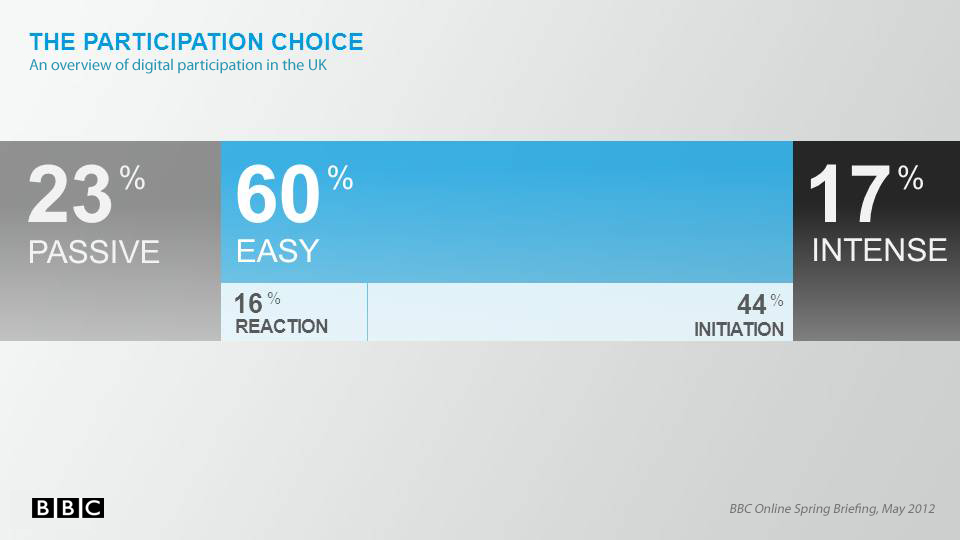
  • This has been driven by the rise of ‘easy participation’: activities which may have once required great effort but now are relatively easy, expected and every day. 60% of the UK online population now participates in this way, from sharing photos to starting a discussion.
  • Despite participation becoming relatively ‘easy’, almost a quarter of people (23%) remain passive – they do not participate at all.
  • Passivity is not as rooted in digital literacy as traditional wisdom may have suggested. 11% of the people who are passive online today are early adopters. They have the access and the ability but are choosing not to participate.
  • Digital participation now is best characterised through the lens of choice. These are the decisions we take about whether, when, with whom and around what, we will participate. Because participation is now much more about who we are, than what we have, or our digital skill.

Through these insights they developed a new model of digital participation: The Participation Choice (see graphic at top of post). The link above also takes you to the video of Holly’s talk on the subject.

Although this is more a “Social Media” piece of research, the lessons for using similar tools in a Social Business setting are clear – the tools can drive the level of engagement well, or badly.

To reverse the old saw, if the implementation is poor, it may actually be the tools that are to blame, not the workers.


Share this:

  • Tweet
  • Email

Filed Under: collaboration, social business, social media

Business as a Social Object

February 1, 2014 By Janet Parkinson

Business as a Social Object

“Could business become nothing more than a social object, with individuals collaborating via social networks, doing what businesses used to do?”

I put out this idea last September at our Patchwork Elephant Conference about what the future could hold for Social Business.  Our first conference was hosted 4 years ago when the term ‘Social Business’ hadn’t really been coined – how rapidly things can change.

With this in mind I talked about the possible future of social + business and how, if you take an idea that can seem totally unthinkable and unacceptable, it can become thinkable given the right ‘window’ of time.  This is based on the Overton Window theory that there is a narrow ‘window’ when a range of ideas will be accepted by the public.  If you take a ‘way out there’ idea which appears completely unthinkable, then push it as far as you possibly can then sometimes, given the right ‘window’, that idea eventually becomes thinkable and acceptable.

Here are 2 concepts which could be possible in 40 years time. They may seem pretty unthinkable – but can they become truly thinkable if pushed to their extremes?

“What if businesses became nothing more than a social object – that’s to say that social networks would be used simply to coordinate all activities that businesses used to do?”

“Nanotechnology will destroy the present social and economic system – because it will become pointless” (James Burke on Radio 4 PM, August 2013)

James Burke was a famous BBC reporter on Tomorrow’s World in the 1970’s and chief presenter for the BBC’s coverage of the first moon landing in 1969.  In 1973 he was asked to predict what life would be like in 20 years time – that’s 1993.  Back in 1973 the only computers around filled floors and there were very few.  There was no internet, no email, no mobile phones.

He predicted that:

  • Storage of personal information in databanks would be accepted – at least by the young
  • People would realise that the sharing of information would help organise society better
  • Computer aided learning systems would provide children with their own plug in superteacher
  • 300,000 computer terminals would be in use by the year 2000 providing forecasts on the effects of management decision making

There were in fact 146 million computers by 2000 so his timescales were a bit inaccurate but he did well.  Yet in 1973 most people viewed these predictions as totally unthinkable.

So when Burke last year suggested on Radio 4 PM that in 40 years time “Nanotechnology will destroy the present social and economic system – because it will become pointless” this may sound unthinkable, but it’s probably worth thinking about…

Burke believes that it may be possible that in 40 years time we could all own personal nanofactories which could reproduce stuff on a molecular level.  It should be possible to make virtually anything – for virtually nothing.  All we would need, he says, is air, water, dirt, and acetylene gas (for carbon) and we could manufacture virtually everything – from gold, food, our utilities or even a house.

We could, he suggests, become entirely autonomous!

This does sound really unthinkable – but perhaps this isn’t quite so far out there as it sounds.  Take the current trends of everything becoming smaller, cheaper and networked – like 3d printing and the internet of things and push this out over 40 years… Machines are already working at the molecular level – the University of Manchester has recently built one which they’re planning to modify to build penicillin.

The Endgame: Radical Abundance

So what’s the endgame with all this?  Radical Abundance!  The latest new new thing that’s just about to hit us and is being pushed not just by Burke but by others like Eric Drexler too.

So assuming that we could produce everything we needed, what could this mean for business?  Here’s a possible snapshot:

  • Production: whether goods were made at home or locally on demand it could mean that large scale manufacturing would be knocked out
  • Transport:  if there were no goods to be moved around the transport industry would be under threat
  • Consumer facing businesses selling goods:  would have serious problems
  • Sales & marketing:  what for if there were no goods to flog?
  • Business support services:  would dwindle
  • Finance:  a lot of the current financial system is based on betting on firms

Is this all becoming thinkable to you yet?  Or at least more thinkable than before you started reading?

So let’s now return to my original concept:

“Could business become a social object with social networks acting as platforms for individuals to coordinate all the activities businesses used to do?”

Following on from Burke’s predictions perhaps now this idea doesn’t seem so far fetched.  We only have to look at the current and quite sudden rise of the collaborative economy (another term which wasn’t really known 4 years ago) to see how companies in this space such as Airbnb and Uber are seriously challenging traditional business models.

Here are the beginnings of business models being redefined with individuals collaborating via social networks and relying on trusted parties, bypassing traditional hierarchical capitalist models.  Platforms are being used by crowds to do what businesses used to do.

“The Future is here, it’s just not evenly distributed yet”

William Gibson‘s “The future is here, it’s just not evenly distributed yet” now springs to mind.  Let’s take the social platform Airbnb to illustrate what we mean.  Founded in 2008 by Brian Chesky and his roommate when they charged visitiors to sleep on their apartment floor, Airbnb has risen within 6 years to arrange 10m stays in 550 000 rooms in 34,000 cities and is likely to become the world’s largest hotelier within the next year.

As the collaborative economy expands, it’s clear that it will impact various markets, potentially reshaping them as integral parts of the social networks we engage with daily. Social networks are poised to streamline the way capacity meets demand, across the spectrum. Functions once novel, like Airbnb, Uber, and Lyft, are now foundational, much like how AOL was once a gateway to the web experience, which has since become part of our ubiquitous digital infrastructure. Similarly, online markets are evolving, with rating services becoming essential. Top rated property brands, along with other businesses, may find it inevitable to integrate as nodes within this sprawling social mesh—becoming, in essence, social objects that are inherently connected through user interactions and reputations.

The World as a Social Market

Trust and transparency will be maximised, transaction costs will be minimised.  The whole trend of these social infrastructures is to drop transaction costs between buyers, sellers and information holders so the cost of bringing buyer and seller together will fall to insignificant numbers.  Ronald Coase predicted this in the 1930’s.  He foresaw that the inevitable outcome is that whenever possible the size of the firm will be reduced to a minimum size rather than keep all the extra functions it needs today like finance and sales etc.  The size of the firm in the case of a supplier to Airbnb is nothing more than your spare room and an internet connection.  Ebay was a forerunner to this – but it’s becoming clearer that eventually all the world will become a social market.  Any business which tries to limit transparency and remain opaque or is trying to create arbitrage where there is none will find it difficult to compete and maintain their strategic position.

Over time, this mesh will become regulated – infrastructures always do.  Electricity, water, telephony all ended up as part of the utility infrastructure and this will be no different.  The main problem for the individual will be the sheer scale of the mesh – we will need tools to navigate it.  Some tools will come from the infrastructure itself but we imagine that some tools will come from yourself.  This ties in closely with the VRM concept of tools being created for individuals to manage and control their own data, allowing access only to those to whom they give permission.  We could imagine us all owning our own smart systems with data controlled by ourselves – a bit like owning an electric appliance which you plug into the mesh – that could source the relevant data, barter the deal and present the options in order of importance, then automatically make all the necessary arrangements for you.  The opportunity for profiteering in these transactions would be minimal – regulation would be complex.

Yet this is a utopian view of the world.  It would rely very much on total trust and could go very wrong in bad hands. In my next post we’ll look more deeply into the shadows of a potential future for Business as a Social Object.

Share this:

  • Tweet
  • Email

Filed Under: business innovation, collaboration, digital disruption, future, social business

The Dark Side of Open Data

January 31, 2014 By Alan Patrick

The Dark Side of Open Data

I gave a talk at the Open Data Institute on “The Dark Side of Open Data” – short writeup on the Broadsight blog over here.

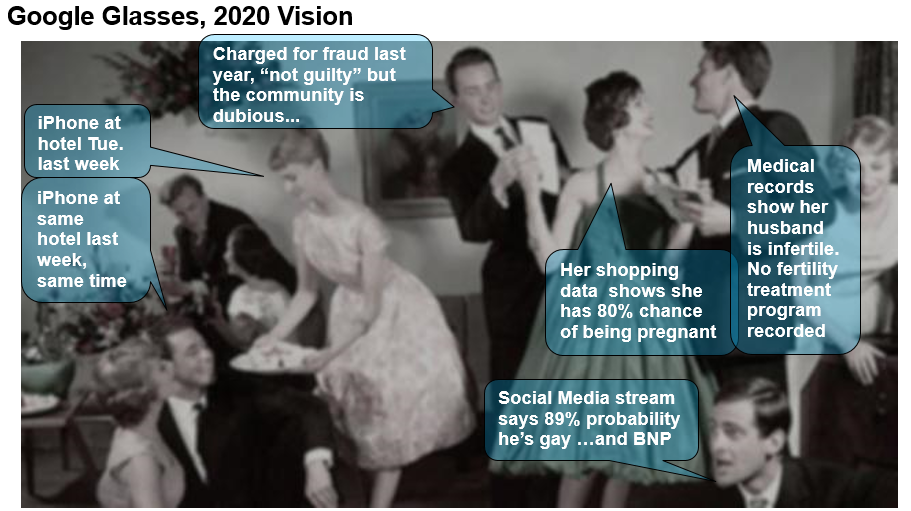
Picture above is from one of the slides, imagining augmented reality glasses which use facial recognition then search social media and various databases to get the dirt on people at a cocktail party. All the cases in the picture have already occurred, or could if data from proposed Open Government databases was triangulated.

My presentation is over here; and the audio is here

Share this:

  • Tweet
  • Email

Filed Under: business innovation, data analysis, digital disruption

« Previous Page
Next Page »

The Agile Elephant blog – thought leadership, ideas, news and discussion around digital transformation, business strategy, new business models, new management thinking, enterprise social networks, social media, social collaboration, knowledge management and the changing nature of the workplace.

Subscribe by email

Enter your email address to receive notifications of new posts by email.

Join 30 other subscribers
My Tweets

Subscribe to our Blog by RSS

About Us

Agile Elephant is a new kind of consultancy designed to help companies embrace the new digital culture of social collaboration, sharing and openness that is changing business models and the world of work.

Contact us to find out more!

Our founder's blogs:

broadstuff

@DT on Medium

Technotropolis

Our blog:

The Agile Elephant Blog

Site Log In | Site Log Out

Subscribe to Site RSS

Subscribe to our Blog via Email

Enter your email address to subscribe

Join 30 other subscribers

Copyright © 2026 ·Streamline Pro Theme · Genesis Framework by StudioPress · WordPress · Log in