Agile Elephant making sense of digital transformation

innovation | digital transformation | value creation | (r)evoloution

  • Email
  • Facebook
  • Google+
  • LinkedIn
  • Twitter
  • Home
  • Manifesto
  • Services
    • Our Approach
    • Our Services
    • Making Collaboration Work Packages
    • Collaboration Solutions
    • Our Experience
    • Workshops
    • Innovation
  • About Us
    • The Team
    • Why we do what we do
    • Why are we called Agile Elephant?
    • Our Partners
    • Our Clients
  • Get Involved
    • Events
    • Meetups
    • Unconference
    • Newsletter
  • Resources
    • What is Digital Transformation?
    • What is the Digital Enterprise Wave?
    • Our Research
    • Case Studies
    • People We Follow
    • Articles & Links
    • Books That Inspire
  • Blog
  • Contact Us
Home Archives for Alan Patrick
Social Business – increasing maturity drives results

March 30, 2014 By Alan Patrick

Social Business – increasing maturity drives results

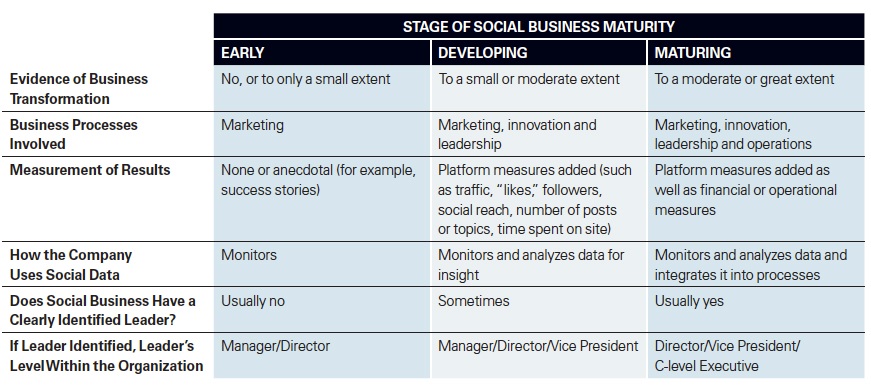
Interesting article in the MIT/Sloan Review about companies who are succeeding in using Social Business tools. They surveyed over 4,800 respondents around the world. In essence the research` shows that value is concentrated most strongly in companies that have reached a certain level of sophistication in relation to their social business initiatives, which they refer to as social business maturity (see diagram above). In summary, they see six major signals of increasing maturity (summarised below):

Social business maturity involves business process transformation, not just using social tools and technologies in the enterprise. We asked respondents whether social business initiatives lead them to develop new business processes or fundamentally transform existing ones. Seventy-one percent of respondents in maturing social businesses say that their social business initiatives involve a fundamental transformation in business processes, as opposed to only 28% of respondents from companies in the early stage of social business maturity. This finding suggests that social business entails more than just adopting social tools in an organization. Rather, it involves redesigning business processes in ways made possible by these tools.

Social business often starts in marketing, then gets applied to other functions and processes. We asked respondents for what purposes their companies used social business tools. Companies in the early phases of social business maturity were more likely to report using social business primarily for externally facing activities, specifically marketing functions. Companies with a greater level of social business maturity, in contrast, were more likely to report social business use balanced between internal and external uses, with both innovation and leadership applications used nearly as much as marketing applications. Only maturing social businesses report applying social business tools to business operations to a great or moderate extent (60%), compared with 13% of the companies in an early stage of social business maturity.

Social business maturity involves increasing sophistication in measurement. Companies have been looking for ways to effectively measure social business results to assess ROI:

First, although 52% of the least socially mature companies do not measure their social business initiatives, this number drops substantially as companies move out of this earliest stage of maturity. Second, although anecdotal evidence is only the first step toward measurement, it remains nearly equally important for companies at all stages of social business maturity. Even the companies with the most mature social business practices apparently need to continue telling success stories to drive use of social business tools. Third, once companies begin quantitatively measuring social business results, our data suggest a path of increasingly sophisticated measurement.

More mature social businesses increasingly rely on social data. Our research also suggests that companies with more mature social business practices are more likely to rely on social data. Eighty-eight percent of respondents from such companies say social data are important, compared with 38% of those from companies in the early stages of social business maturity. Maturing social businesses are also more likely to use this data in different ways than companies with less mature social business practices. For example, while only 8% of companies in the early stages of social business maturity integrate social data into their operations to a moderate or great extent, 67% of maturing social businesses do so.

Social business maturity involves a higher level of responsibility and accountability within the organization. More mature social businesses are more likely to report a single leader or group responsible for social business initiatives. These leaders are also likely to be at a higher level (such as a vice president or member of the C-suite) in more mature social businesses. State Street’s Hannah Grove noted the importance of managerial responsibility for social business. “Ownership is a very important question, particularly when you think about the ramifications for anything not working out well,” she said. “And so there really has to be a sort of singular owner — for lack of a better word, governance and compliance — just to make sure that people don’t go off the reservation.”

Maturing social businesses manage new challenges along with successes. Greater social business maturity does not necessarily mean that a company has overcome the challenges associated with social business. In fact, some of our data suggest successful social business initiatives might actually introduce new problems for companies. In multinational companies, although social business maturity was highly correlated with how much social business helped a company operate across geographies, it was also associated with increased operational challenges across geographies.

This report comes at an interesting time, given that Gartner recently estimated that through 2015, nearly 80% of social business initiatives would fail to meet their stated business objectives. Both that report and this may be true, I recall in the early days of MRP II (precursor to ERP) system implementations, making it work was hard and there were many failures, and the companies that made it work had to change a lot of things – it was quite a journey.

To us the conflicting reports, and many of the first generation suppliers consolidating, is a sign that the market is in a changing phase – but reports of its death are somewhat over-estimated in our view.

 

Share this:

  • Tweet
  • Email

Filed Under: Uncategorized

Finding influencers and making their influence snowball

March 14, 2014 By Alan Patrick

Finding influencers and making their influence snowball

McKinsey on using social tools to find hidden influencers in a business. The issue with most major change programs succes is winning over the people:

Winning over skeptical employees and convincing them of the need to change just isn’t possible through mass e-mails, PowerPoint presentations, or impassioned CEO mandates. Rather, companies need to develop strong change leaders employees know and respect—in other words, people with informal influence. But there’s one problem: finding them.

The solution, say McKinsey, is to use Snowball sampling:

…a simple survey technique used originally by social scientists to study street gangs, drug users, and sex workers—hidden populations reluctant to participate in formal research. These brief surveys (two to three minutes) ask recipients to identify acquaintances who should also be asked to participate in the research.

In business, one can use similar approaches to find out:

Companies can construct simple, anonymous e-mail surveys to ask, for example: “Who do you go to for information when you have trouble at work?” or “Whose advice do you trust and respect?”.  In shop-floor and retail-store settings where workers don’t have ready access to e-mail, companies can use anonymous paper surveys.

McKinsey found that:

– influence patterns almost never follow the organizational chart.

– exist at all levels of a company and aren’t easily identified or predicted by role or tenure (although relatively few are senior company leaders, as might be expected given their formal influence).

– even when company leaders believe they know who the influencers will be, they are almost always wrong.

No great surpries there, but useful corroboration.  Good point on needing non-digital tools for finding such people among non or semi-connected workers, many businesses still have many of these. Anyway, once you have found your foxes, the next is to create the conditions to influence the enterpriswith. McKinsey found 4 techniques worked well:

1. Think broad, not deep. The [client] company sought influencers in a swath of regions, functions, and roles (including frontline ones). The diversity of opinion and experience not only helped provide energy and good ideas but also later proved important in communicating the changes, in role-modeling them across the company, and in combating skepticism.

While there is no formula to determine how many influencers a company should include, the sample must be wide enough to pull in a diversity of roles and perspectives….. The goal is finding enough people with influence in enough roles to get a high degree of connectivity across the company through a relatively small number of connections (out of the total number possible). Some roles may prove to be particularly important. (Case study mentioned cashiers in retailers)

2. Trust, but verify. To build trust, participants at the manufacturer [one client] received letters of invitation explaining the program’s goals, why these employees had been nominated, and how the company wanted them to help. It took pains to make the initiative voluntary. Having influencers opt into change efforts builds trust and encourages high-quality results. Indeed, many influencers will be eager to help and view the experience as an honor worthy of their best efforts.

But goodwill dissipates quickly if employees feel coerced. Before extending any invitations, the manufacturing company discreetly vetted all participants with Human Resources and local managers. Vetting the participants helps “screen in” influencers who are well regarded by both peers and superiors, while acknowledging the reality that not all influence is positive and not all influencers want change. Although “bad eggs” should be screened out of important program roles, they still merit attention—as valuable sources of insight about how to convert skeptics.

3. Don’t dictate—cocreate. Both clients studied  engaged their influencers as thought partners in the change effort, not just as mouthpieces for change. That’s an important point because the influencers’ informal authority dwindles if they seem to be doing the bidding of management. The participants were organized in teams addressing themes they helped identify (for example, shop-floor safety, incentives for employees to think more innovatively, and actions to make the company more customer focused). Because both efforts required sustained input from the participants, the meetings inspired and motivated them. As the programs gathered steam, many of these employees helped to spread feelings of empowerment in their usual roles as well.

4. Connect the dots. To boost the odds of lasting change, the manufacturer created an online forum, supported by videoconferences, aimed at encouraging the influencers to meet and support one another periodically. In an effort to make these interactions as meaningful as possible, the company divided the influencers into smaller, volunteer-led groups focused on common themes. This approach not only helps to produce more tangible actions and outcomes but also makes it easier for the groups to connect with colleagues working on similar projects in other regions or business units. The participants’ sense of community, and of themselves as change leaders, grows as they share best practices, discuss new ideas, and address the inevitable challenges. The company’s early commitment to in-person gatherings has made subsequent interactions by e-mail, telephone, or videoconference far more meaningful. In general, creating opportunities for influencers to meet in person usually pays big dividends.

There is a noticeable Hawthorne effect (or should one say a snowball effect):

While the programs at both companies are works in progress, these early success stories have highlighted specific activities and behavior that drive performance. They are thus helping the companies to further articulate and accelerate the expected changes. Employee-satisfaction scores have also improved sharply at both companies, in large part thanks to increased levels of collaboration and empowerment.

It’s interesting to think about how one may adapt social business techniques for this, and vice versa. First thoughts are that as a way of creating an influence programme for social business implementation, it seems fairly sensible. Second thought is that it would go much better with certain social tools already in situ (internal collaboration and communication software, crowdsourcing for internal inovation and problem solving for example.). It would be interesting to see if you could find the same people using email or social analytics, or  see if one could monitor influencer impact digitally.

Share this:

  • Tweet
  • Email

Filed Under: Uncategorized

Running Open Organisations – Lessons from the Past No. 1: Ricardo Semler

March 3, 2014 By Alan Patrick

Running Open Organisations – Lessons from the Past No. 1: Ricardo Semler

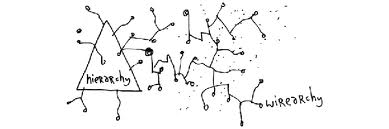
(Wirearchy Cartoon above by Hugh McLeod of GapingVoid)

There has been a lot of discussion in recent months about ways of organising work and structuring organisations in future enterprises – Podularity, Holacracy, Wirearchy, Post-Shifting , Smart Working, at a conceptual level Umair Haque and what I call “Stowearchy” ( 🙂 ) to name but a few recent thinkers, and that is not to mention all the academic work.  We have been around longer than we’d like to admit, and some of these are using concepts that have been tried before, and we wondered if there was anything to learn from these. The first is to look at the organisational revolution Ricardo Semler started off in SEMCO. To recap, the Semler story in brief is that (Wikipedia):

Ricardo Semler went to work for his father’s company, originally called Semler & Company, then a Mixer & Agitator supplier in São Paulo. Ricardo favoured diversification away from the struggling shipbuilding industry, which his father opposed. After heated clashes,  Antonio Semler resigned as CEO and vested majority ownership in his son in 1980 when Ricardo was 21 years old. On his first day as CEO, Ricardo Semler fired sixty percent of all top managers. He began work on a diversification program to rescue the company.

That was the start of a  fairly revolutionary set of steps

He fired most of the top managers and got rid of most management layers; there are now three. He eliminated nearly all job titles. There was still a CEO, but a half-dozen senior managers traded the title every six months, in March and September. Executives set their own pay, and everyone in the company knew what everyone else made. All workers set their own hours. Every employee received the company’s financial statements, and the labor union held classes on how to read them. Workers choose their managers by vote and evaluate them regularly, with the results posted publicly.

Not all was sun and light, there were problems. Attempts to introduce a WL Gore style matrix organisational structure in 1986 failed to achieve desired improvements.  It takes experimentation to make things work in any one business. There are some specifics worth noting – firstly, on cells (or Pods, as they seem to be called now):

In 1985 one of his managers suggested to Semler that he should create self-managed teams of six to eight production workers who would be entirely in charge of all aspects of production. They set their own budgets and production goals. Compensation was then tied to budget and production performance. Costs went down. Productivity and profits went up. Semler liked that. Many production workers liked that. Others were leery of taking on what they saw as “management” responsibility. It was the middle managers that didn’t like the new concepts. They felt they were losing their power and prerogatives. In a little over a year, one third of them quit.

Then came Brazil’s financial crisis and the Government severely limited access to liquid capital. The company tried everything to cut costs, but eventually it came to cutting staff, which with Brazil’s labour laws would have broken the company. At that point:

…a worker’s committee approached Semler with a proposal. They’d take a pay cut, but with three conditions. First, the profit-sharing percentage would be increased until salaries could be restored. Second, management would take a forty percent cut in salary. And, third, the workers would get the right to approve every expenditure. Semler agreed.

In the plants, workers started handling multiple job duties and using their knowledge of how the factory worked to come up with new procedures that saved time and money. At one factory they divided themselves into three manufacturing units of about 150 people each. Each unit had complete responsibility for manufacturing, sales, and financial management.

The autonomous team idea was adopted throughout the company. As it evolved the teams began hiring and firing both workers and supervisors by democratic vote. Policy manuals disappeared to be replaced by a policy of common sense. There is an actual manual, though. It runs about twenty pages and is filled with cartoons and brief statements of principle.

150 seems interestingly close to the main Dunbar Number. The next step was how these units may be set free to change focus or expand:

One more change had to be completed in order to create the Semco we see today. In the late 80s a group of engineers had received permission to become what was called the Nucleus of Technological Innovation (NTI). The idea was that they, and a group of workers, would become fully autonomous. In effect they were seeking to extend the autonomous team concept to a larger group.

Effectively the group would operate entirely on its own, though with the same culture as Semco. Their performance would be reviewed every six months. They took a percentage of sales as compensation. That model, essentially extending the autonomous teams, eventually became the model for all of Semco.

At the end of the first six months, NTI had identified 18 such opportunities. Following the success of this initiative, satellite units were encouraged throughout Semco. By the late 1980s, these satellite units accounted for two-thirds of its new products and two-thirds of its employees. As Fortune wrote in 2001, “Obviously it’s all insane, except that it seems to work.”  There is much more, described in Semler’s book “Maverick”.

After the first decade, partly due to a fainting spell when he was 25 due to the huge workload inspired him to want a greater work-life balance for himself and his employees,  Semmler wrote a second book “The 7 Day Weekend” describing their ongoing experience, focusing on the human issues. This structural freedom requires real disciple to operate properly:

The corollary of democracy and treating people as adults – the only real rules at Semco – is huge peer pressure and self-discipline. ‘It’s as free market as we can make it. People bring their talents and we rely on their self-interest to use the company to develop themselves in any way they see fit,’ declares Semler. ‘In return, they must have the self-discipline to perform.’

There’s no hiding place for those that don’t, even if performance is judged in non-standard ways. ‘To survive here you have to get on someone’s list of people they need for the next six months, and you can’t do that by playing political games.’

They also had to continually work on reducing heirarchy:

Even now [2002], laments Semler, ‘we’re only 50 or 60 per cent where we’d like to be’. Hence the constant attempts to unsettle even Semco’s unusual order – the latest of which is the disbandment of the firm’s headquarters in favour of satellite ‘airport lounge’ offices dotted around Sao Paulo. Not only do people not have fixed desks, they don’t even have fixed offices.

‘They thought it was about location. In fact, it’s about eliminating control,’ says Semler happily. ‘If you don’t even know where people are, you can’t possibly keep an eye on them. All that’s left to judge on is performance.’

Operating a business with a very low level of heirarchy and structure requires extraordinarily discipline.  In fact,  Semmler noted one of the major tasks was to screen all the New Age Work enthusiasts and those who didn’t want to get fully involved with the business out of the applicant pile, as neither type has worked out (which has provoked many to question what happens to those who cannot become fully engaged with business life). But to finish, he left a series of principles which are interesting to think about in a Social Business context:

  • Forget about the top line. (i.e. profit, not revenue)
  • Never stop being a start-up.
  • Don’t be a nanny.
  • Let talent find its place.
  • Make decisions quickly and openly.
  • Partner promiscuously.


Share this:

  • Tweet
  • Email

Filed Under: Uncategorized

A calculated approach to talent

February 26, 2014 By Alan Patrick

A calculated approach to talent

We hear a lot about the “War for talent”, but over here at Agile Elephant we are a bit dubious about whether “talent” is always properly understood by those recruiting it. We know from various studies that a motivated, well organised team of “B listers” can beat superstars on a regular basis, as “Moneyball” showed clearly.

This is an interesting piece about Google’s experience of recruiting, and how they have shifted from Old Google recruiting, which has found smart people but not necessarily the best talent.  Google’s head of people operations, Laszlo Bock, detailed what the company looks for now. And increasingly, it’s not about credentials. Google has spent years analyzing who succeeds at the company, which has moved away from a focus on GPAs, brand name schools, and interview brain teasers.  They have found that the race is not to the one with the strongest CV on paper:

– Graduates of top schools can lack “intellectual humility” – Megan McArdle argued recently that writers procrastinate “because they got too many A’s in English class.” Successful young graduates have been taught to rely on talent, which makes them unable to fail gracefully. Google looks for the ability to step back and embrace other people’s ideas when they’re better. “It’s ‘intellectual humility.’ Without humility, you are unable to learn,” Bock says. “Successful bright people rarely experience failure, and so they don’t learn how to learn from that failure.” Many schools don’t deliver on what they promise, Bock says, but generate a ton of debt in return for not learning what’s most useful. It’s an “extended adolescence,” he says.

– Learning ability is more important than IQ – Succeeding in academia isn’t always a sign of being able to do a job. Bock has previously said that college can be an “artificial environment” that conditions for one type of thinking. IQ is less valuable than learning on the fly, Bock says.  A behavioral interview, in contrast with those that ask people to figure out how many tennis balls fit into a tennis court, might ask how you’ve reacted to a particularly difficult problem in the past. They can also help find people who fit the company’s definition of leadership. It’s not about leading a club at school or an impressive prior title, Bock says, but the ability to step up and lead when it’s necessary.

I must admit, a part of me looks at this and says – “yeah – and?” but its a sign – in my opinion – that the last 15 years or so of recruitment “best practice” are being seen as the chimera they are, having been filled with too much pseudoscience, cod-psychology and arse-covering fear of being seen to make the wrong hire, so the best paper trail proof of “talent” is used as a substitute for judgement.  Y Combinator’s Paul Graham recently noted that they have found the top software engineers are not minted at University, a useful predictor is what they were doing with their teenage years – hacking code and building computers is a good sign.

I think 2 things are happening now, both based on hard headed empirical logic:

– Firstly, we are starting to see a return to things everyone actually always knew, but its now OK to say it, think it, and do it again – human factors and judgement matters. This is largely what is going on with Mr Bock in Google

– Secondly, as data becomes digital its easier to measure the end to end effectiveness of employees vs. their attributes, and calculate algorithmically what sort of profiles work best in different companies.  Some time ago  I wrote about  evidence now emerging that when cold analytics are used, it turns out that the most talented employees and managers are not the highly rated superstars.

Social business, in our view, is a blend of the technology and the human insight –  so recruitment is, I suggest, not going to be any different.  (interestingly, the same thesis comes up when Nate Silver discusses using Big Data analytics – the algorithm is not enough, you need the human insight)

Share this:

  • Tweet
  • Email

Filed Under: Uncategorized

The 7S model – where “S” means Social

February 23, 2014 By Alan Patrick

The 7S model – where “S” means Social

Last week we went to the Enterprise 2.0 Summit in Paris, I posted up my notes from the case studies earlier (Day 1 and Day 2 here), but I’ve been letting the overall lessons from the conference percolate and gel in my mind. Also, I’ve had the opportunity to read a lot of other people’s thoughts over the last few days. I believe that what is emerging in the arena is the following:

  1. The “first wave” of the E2.0/Social Business movement is coming to an end, the consolidation of Dachis and Sprinklr, new directions from PostShift, the entrance of major consulting players like McKinsey and Deloitte, and the emergence of (or purchase of) social business tools by major software players, plus the increasing calls for integrated systems, all signal major shifts in a young industry.
  2. The increasing number of emerging case studies are starting to make it clear what works, and what does not. We are also starting to see which of the “patchwork elephant” array of social business concepts and theories that have been around for the last decade or so are looking valid, and which are looking  more fanciful (or more kindly, are still before their time).
  3. We all noticed a split between what I call the “humanist” and “technical” approaches to Social Business apparent at the conference, and to an extent this article reflects a concern that 2 camps emerge in what should be a holistic ecosystem..

To an extent point 1 is a given, any successful trend has a number of predictable phases in its lifecycle, and what we are seeing in my opinion is the shift from early adopter to the early mass market phase, as the ecosystem changes  case studies are starting to show what sort of Social Business is making it over the Chasm first. This is not to say that other models will not follow as the sector matures, but we are seeing the first phase emerging.

Point 2 I will talk about in a later post when I’ve done a full analysis of all the case studies, but I’ve summarised some emerging clear lessons over here. I was intrigued by the emergence of so many ideas about organising businesses (with wry interest I note that there are a lot of echoes of  theories of 30 – 40 years ago) but it is emerging as a major area that needs addressing. This is hardly new news in Social Business either, Adriana Lukas reflected on this issue in the first Patchwork Elephant conference we ran in 2010, and was looking at Heterarchical and Holon approaches even then based on her client experience. As I wrote in my piece on the many Dunbar numbers, business copied its  structures from the military structures of yesteryear, the military has changed hugely since WW2 but its not clear that business has changed so much. There is clearly a well overdue time for change.

On the point of multiple Dunbar numbers, Dunbar is quite clear that different sizes of human network structure have very different requirements on the human relationship dynamic, this is often forgotten in a world that thinks everyone you link to on a social network is a “friend”. To an extent technology can help (there was some fascinating hints on how social business tools can overturn the Allen curve from the case studies exploring Proximity) but it is extremely unlikely in my view that the way one can organise and run a 5 person cell will ever be the same as running a 15 or 50 person operation, never mind a 150 or 500 person one.

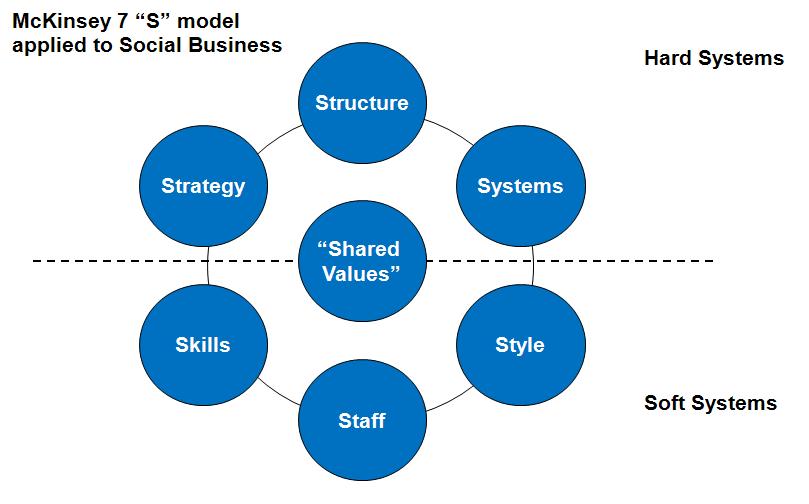
However, what this post is about is point 3, the apparent difference between “technical” and “humanist” approaches to social business and the damage such a split could cause. My view is that they are two halves of the same elephant, a necessary yin and yang if you like. The model I believe best expresses this in a useful way for business is the McKinsey 7S model (another oldie but goodie), so much so that I see it as the “7 Social” model. The model was designed as a strategic vision for groups, to include businesses, business units, and teams. The model is based on the theory that, for an organization to perform well, these seven elements need to be aligned and mutually reinforcing.

The diagram of the model is at the top of this post, and we have a more detailed breakdown over here, but in essence it says there are 2 sides to Social Business, the “Hard” requirements – systems, strategy and structure – and the “Soft” requirements – staff, skills and style, and the whole system has at its hub the Shared Values of the enterprise.

In a bit more detail – the “Hard”  (or Technical) requirements are:

Strategy – What the organisation is seeking to accomplish, and how the organisation plans to use its resources and capabilities to deliver that. This would include what Social business systems are to be used, and what they are to achievers.

Structure – How is the organisation structured? What are the reporting and working relationships? How are decisions made? How is information shared (formal and informal channels) across the organisation? This is an area where there is a lot of thinking around how Social Businesses are to be structured, but many ideas are still conjectural and “what works” is still in very early days.

Systems –  the primary business and technical systems that drive the organisation. This is about the technology used, but although technology is important, it is only 1 of 7 areas to be considered.

The Soft (or Humanist) requirements:

Style – the management/leadership style. Are there real teams functioning within the organisation or are they just nominal groups? What behaviours, tasks and deliverables does the management/leadership reward vs what they desire?

Staff – What is the size of the organization? Are there gaps in required capabilities or resources?  What is the plan to address those needs?

Skills – the skills the organisation requires to deliver the core products and(or) services. If there are any changes required in the skills the organisation needs, are the new skills sufficiently present and available? How are skills monitored, assessed, and improved?

Note that the model puts equal weight on the Humanist and the Technical areas, but note also that this entire model revolves around the shared values area. Although much of the shared values logic is aimed at driving engagement, collaboration and trust, this is not a purely “soft” arena.  There is some hard edged business logic behind this:
  • There are “hard” benefits behind engagement, from length of employee service to reduced absenteeism and more general employee efficiency.
  • Shared values help to synchronise decisions, ensure that everything is “pointing in the same direction”/”on the same page” – i.e. they improve operating efficiency
  • To attract and retain the best talent, a business either needs to pay top dollar in a global market, or needs to be seen as being more than just a profit machine, it needs to stand for something bigger
  • People feel more motivated and inspired if there is a bigger purpose to their work than the 9-5 drudge
  • People like to feel they “belong” to something worth belonging to, it gives work purpose
  • Research we did of companies with strong founding cultures (eg in the Great Depression) was that these can last a long time, even several generations in a business

In short, the model demands that equal weight is placed on the technical and humanist considerations, and the overall system is anchored on a unifying “big picture” vision of the business. The 6 components are important, no one area is an answer in and of itself. And it’s the shared values that really gives the edge. You can see it in any area of human endeavour – a well trained team, working with passion in a common endeavour, can beat the odds, the masses and the all-stars.

In conclusion, in my view that the most effective approaches for Social Business going forward will be those that best integrate the Technical (hard) and Humanist (soft) requirements, behind fully engaging the employees.

Share this:

  • Tweet
  • Email

Filed Under: Uncategorized

Day 2 Case Study Summary at Enterprise 2.0 Summit

February 15, 2014 By Alan Patrick

Day 2 Case Study Summary at Enterprise 2.0 Summit

Day 2 at the Enterprise 2.0 Summit, and more case studies. The first session was on enabling output improvement, interesting in that it was financial  services, which has extra issues with the “3 Amigos” – Legal, Security, Compliance

Dan Florescu – ING
Project to increase engagement and collaboration started in 2010, many people only work 4 days a week, some on 3 – need to learn to manage an army of job sharers. Used Sharepoint, not social at time [I can support that – AP] so did mods, which was expensive – later added Sitreon as an overlay. Put system in using scrum approach.

Business aims were to
– enhance profiles with skills and allow people to find the right person easily
– reduce meetings (used online agendas setting and hash tags to cover topics)

Lessons learned:
– Legal, Security, Compliance – the “3 amigos” – very powerful in a financial company. Had a simple user agreement, and a report button to cover these issues.
– Anyone can start a community, but you wind up with a lot of ghost groups. They do a 40 – 60 day clean up – 40 days notification if no activity, 60 days delete
– Had a 25% increase in activity from 2012 to 2013 but need to get more people and doing more stuff to really add value (a critical mass?):
New head of HR – companies these days less likely to listen to bosses, more comms/collaboration/etc needed

Raphaele Naud – Fidelia
Multiple-Site, info in silos, 3000 people, very hard to get info from right person fast. Wanted to centralize info and transform workplace. Choosing tools, used consultants, chose XWiki after an RFP with user requirements – has customisable, good Interfaces. Debut “Wikidelia” 2010, started piloting and onboarding mid 2011, started to adapt system by asking people for feedback, requirements.

KFS for Wikidelia
– critical to have useful information at beginning of system life so first application was online data/document repository
2012 started with community building capability
– management support
– heavy user involvement in task force
– info had to be easy to find information
– must be easy to use or users won’t use, especially to write/add stuff
– set up teams, communicate with managers up front, then all in pilot
– used feedback and learning to adapt and roll out further
– buzz launch – T shirts, info as to where stuff is, SOS helpline, mascot design, then vote

Impacts
– a move from oral to written culture
– had 500 seasonal workers, very fast onboarding
– “un-siloed” the information as it is now held centrally
– now 500 visits a day
– got lots of people getting engaged with helping amend, allowed people to add their own stuff

Now implementing Ideas Box – started off by asking about business strategy issues but
– have a continual operating committee to add stuff, 2 day response to proposals,

Discussion with Dan & Raphaele

Some points:

– Need to understand managers are not as familiar with social as staff are, bigger journey for them
– Banks do have to ensure compliance of documents
– Fidelia uses socnet plus document mgmnt, continual scrutiny
– ING documents are in team databases, socnet only for collaboration

Where the company is making the money, that’s what social should help – motivates managers, makes employees see sense of using system

Benchmarking – did you look at best practice? Managers felt safer if they could see other companies doing it.

Main Success Factors:
– Community mgmnt
– Sponsorship
– Deliver value

The second session was on using social technology to foster innovation.

Mathilde Parlier Blot – Peugeot

Aim was to drive Main driver was not to just stack ideas, needed to make it real, and make it cross discipline
Idea competition – collaborative v competitive balance. – 1000 connected users – predefined deliverables, used gamification and incentives (not sure how). Actions:
– Company wide commas, weekly newsletter, inspiration space with information relevant to competition
– Voting – at least 5 comments to get out of pool for evaluation by specialists
– Got 7000+ uniques, 1300+ participants, 1000+ ideas, 3500 comment prizes – car, health and wellness voucher etc
[AP cynically, gamification means lots of valuable ideas for free, only need to pay for a few]
– 200 useful ideas,

Parallel quick win “Costbuster” idea, shorter/sharper program
– 30,000 + visits, 17000 comments
– 117 Costbusters (short term cost reduction) ideas vs 200 innovation idea
– Euro 40 mil savings

Latest plan – Fusebox – external challenge – 350 visitors to date

Hurdles
– Not Invented Here
– absorption capacity – limit to how much company can deal with
-IP rights
-HR policies at odds with requirements and desired behaviours

Plusses
– break down organisation silos
– higher value on behavioural skills
– customer driven naturally
– positive communications.

Jerome Introvigne – Groupe POULT

It was all in French so its taking me some time to translate it, not a language I’ve ever learned and my Latin doesn’t help a lot 🙂

The following were not strictly case studies, but are notes from an indicative session on structuring Social technologies within the overall business processes

Accenture –  Joao dos Santos

Business Procsss Mgmnt (BPM)  is good for stable, repeatable processes. BPM and ERP doesn’t see Ancillary activities [what I call informal systems spring up to support this], non structured data and non accountable people “moments of truth” decisions

Adaptive Case Management – (ACM) Accenture term = social tech + case management + BPM + Enterprise Case Mgmnt. Case combines events, data,content, people, policies etc. ACM is more lightweight than BPM. It gives you a huge audit trail and traceability from the social data as well

2 Roles of Social Interactions in ACM:
– collaboration drives runtime collaboration, innovation etc – user case management is best tool
– integration with external networks which generates information from market, eg customer complains on Twitter – use various tools for this, open a case to cover eg Twitter complaint

Challenges:
– Need to get closer to beneficiary of the process eg client
– Must be very goal driven
– Transaction drives process, not process driving transaction
– Systems continually self configure.

My take, confirmed by Joao – ACM is aimed at parts of a business with case management potential, eg customer service

Bertrand Duperrin – NextModernity

Requirements
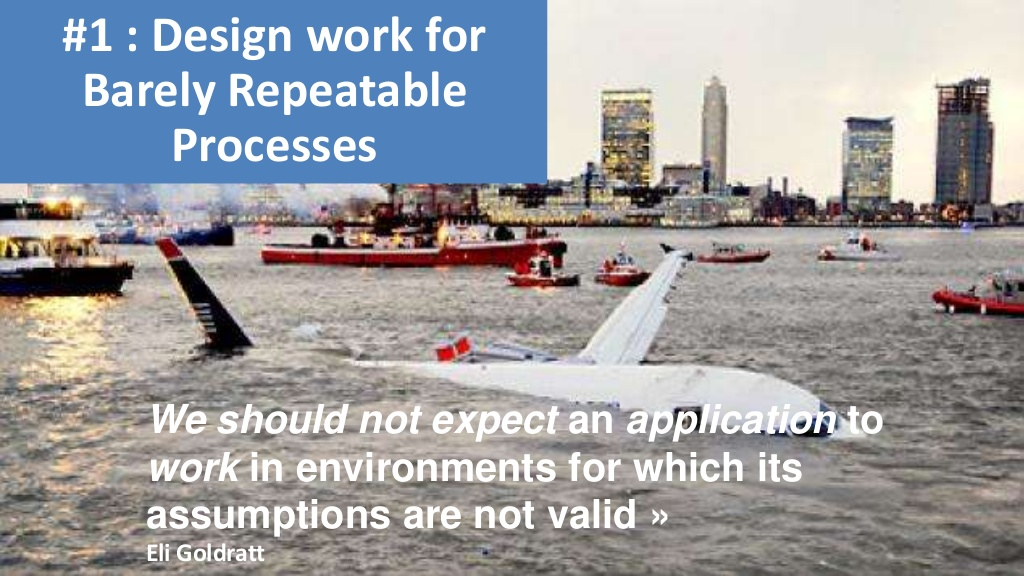
1. Design for BRP ( Bareley Repeatable Processes)
2. Design social for structured activities – how does this tool help me with my business goals, not all your social goals
3. bring social services into context of bus application and vice versa

Challenges
1. It’s not about adding but transforming – but social is very touchy feely, very hard to do predictable, reliably, measurably
2. measuring the impact – don’t know what to measure in social activity, but do know what to deliver in processes – so see how the social processes impact the business metrics
3. managers must adopt not as average users but as managers
4. technology adoption and open standards – yes tech is 20% but it’s the first 20% and really matters.

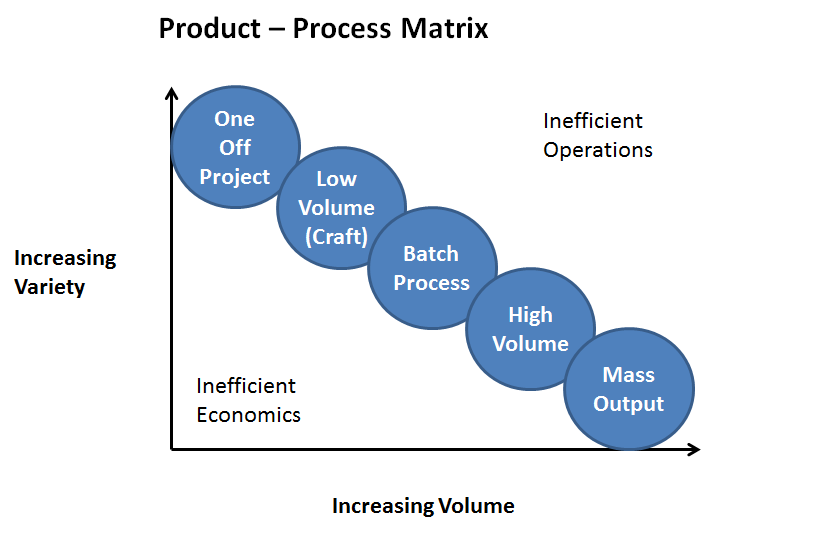
The thing that stood out to me is that Social technologies do not really give any advantage with repeatable processes, they are more effective at dealing with “barely repeatable processes” and unstructured information. The slide I’ve used at the top is from Bertrand’s talk and illustrates this well, with a useful quote from Theory of Constraints originator Eli Goldratt – use appropriate systems for appropriate tasks.  The ERP systems are not going to go away, in my view a similar arrangement will arise where Social technology will be the “mid-range” system between one-off projects and the  main production systems – much the as the product/process matrix works for manufacturing operations
 

Share this:

  • Tweet
  • Email

Filed Under: Uncategorized

E2.0 Summit Case Studies – Day 1

February 14, 2014 By Alan Patrick

E2.0 Summit Case Studies – Day 1

Case StudiesMy main interest at the Enterprise 2.0 Summit this week was to get down and dirty and detailed in the case studies, as in my view (being an Engineer by training) all the theory is great, but it’s when you try and make stuff actually happen that you get a wholly different level of learning.  We will write the studies up in more detail later, but here are the summary take-aways I took away:

Marcell Tardy – Solvay Pasteur
Used Social tools to foster new culture in post merger integration. Used the 6 weeks leading up to a major all new hands convention to put out a lot of issues into the “digital” air, got all the senior managers involved in answering questions and concerns, so by the time of the all hands there had been a huge amount of discussion and debate. Some key benefits were:
– a lot of the issues were aired, some already defused
– major problems to deal with identified for focus
– process in itself built confidence and communication

Joachim Heinz Niemeyer – Bosch
Bosch see a shift from the mass production to network age and wanted to understand how it works. Initially decided to use Social technology to improve knowledge productivity:
– Wanted more innovation – patents per day
– Faster product development
– Reduce lead time of new plant design & development (got it down from 8 weeks to 8 days)

Lessons were:
– Multiple vectors of change – technology, organisation, culture, leadership, guidelines/principles
– Must infuse openness in the technology
– Onboarding wizard very critical to drive adoption

Then used it in a part of the main operations, for Capacity Requirements Planning. Found the traditional methods are fine for mass production, but not good for rapid reaction to customer service. [AP – I can echo that, which is why so may informal systems exist around the “big” CRP system].

Main benefits were:
– All the “unstructured” CRP data in one place on the social net
– Very wide dissipation of problems – ie visibility [AP – sort of like digital Andon lights – wonder what happens if there is chronic under capacity or serious shortages though, you could swamp a system]

Jean-Paul Chapon – Societe Generale
Approach was based on Pragmatism – meant using open source vs “closed solutions” – preferred open source as they had control of the system, the data and future development (key issues for Financial Service security). He made 2 major observations about the implementation:
– Intranet vs Social Media is like a machine vs a “cafe numerique” – one is sterile, the other is active and alive
– This means  you have to let the adoption mature, it has a settling in period

When asked what his biggest surprise was, he said it was the power of open source software v big players

Martin Risgaard Rasmussen – Grundfos
They have used Social tools for a number of applications, but he notes that in a business dynamic you need a clear business purpose for implementing these technologies:

1. Global Talented Manager program
Used Social tools instead of flying to meetings, ran it 24/7. Moved from Lotus Notes to Outlook in 3 months, deployed staff as change agents to help it along and and used Yammer – no emails – so everyone sees answers. v 1400 people involved. 5 main lessons:
– “Not about tech” – but it is, easy access iPads etc are key
– “Not about features”, but it is -eg used translate functions in global company, very useful
– Communication is important. Early adopters forget how little others know, early adopters can’t articulate benefits well, need to give early majority a “why” to use it – set up “chasm” teams to do this (from jumping the chasm)
– Particpant inequality theory (1/9/90) is real, team needed to seed system for quite some time (cf Societe Generale “maturation” above).
– Integrate social into processes, not processes into culture

Why did they choose Yammer? – evaluated Chatter, Yammer, Socialcast, used Yammer as it was bought by Microsoft – essentially already paid for, and Microsoft has major global support. Yammer is now available in Office 365

2. Moving factory operations
Speaking to Martin afterwards, he mentioned another use, which was to use Yammer to pick up all the to’s and fro’s around a factory move – this I can understand, as I was using Social tools most recently to co-ordinate the spares supply and  service issues around setting up and maintaining multiple complex machine tools in multiple locations. Both are examples of a large number of what Sig Rinde calls Barely Repeatable Processes

Joel Framont – LaFarge
Used Social technology to transition brand from product to service by crowdsourcing advice and “hat works2 from across all their areas of operation:
– Used LO Village – 1000 communities, 10000 employees on so far
– ROI – get strong interactions between countries share local answers. Initial step was to measure involvement,  and then develop platform (IT not best at guessing what users want) to improve that
– Used PWC via LaFarge Innovation dept – aim was to get work done faster so needed extra hands/skills

Noted that you need different abilities for handling B2B, B2C and B2E  (employee) environments [AP – agree;  see our manifesto Thesis 3]

Olivier Amprimo – L’Oreal
Aim was “digital proximity” with the customer. Wanted one platform to keep all knowledge common to all was a key business value. (Notes you have to understand corporate culture and select a technology in line with culture).  Implementation was over 15 months:
– Employed virally
– Encouraged robust projects
– Focus on building self help communities
– Activated the water cooler (didn’t say too much on how they made this work)
– Facilitated team meeting

Monitored and assessed growth, key thing the implementation team had to learn was to “densify the network” and  serve as examples (I think this is a common thread in these studies) as well as – handle objections. Another lesson he reiterated was that Social technology has to be efficient. How to get internal “digital proximity” – sit with the people, knock out the obstacles, eventually you get a systemisable approach (cf JiT idea of removing the rocks in the flow, also my notes on Allen’s Law ).

The next challenge after implementaion was to embed it in the organisation, this requires a different set of activities
– Get robust governance at a key point in the project to systemize it
– Integrate with workspace – get the “official nod” from formal and informal major players
– Take advantage of intranet revamps, cost justifies the Social tech and highlights how old style intranets will only manages structured data

Major Lessons
– aim for areas in business where value is created
– need a culture where failure is allowed

Nina Sonne Nikolaisen – COWI
Engineering design company, main output is drawing and papers. 6000 employes globally. Sees social tech as a collaboration project to:
– improvement in performance
– speed

Design specs for Social technology:
1. Tool must support business needs and ways of working
2. Used to use files on spread file drives, share stuff by email and FTP – hard to keep track of latest versions etc
3.  But needed to get skills of people across world – old approaches very poor with global teams

Solution was a collaboration platform. Everyone had MS Lync already. People liked it, were used to it, so they used that.  Lessons were:
– Must support business need…
– ….but must be something in it for user
– Management force (cf Governance above) by not allowing old platforms to expand, or other new platforms to be bought

Metrics – not just people but also speed to save, access to new external user 4min down to 20 secs
– Initial metric – project sites and data volume on new system – 48000 project sites, 7 TB of data
– Now is one of most business critical IT systems in company

Next step – faster document management, client collaboration, reduce IT costs

I asked Nina afterwards about CAD data, as my experience is that it is really hard to integrate this as the files are huge, very different to anything else and the need for version control is absolutely crucial.  She said that they had not yet managed to integrate it at a technology level but responsibility for CAD configuration management now rested under the same team who had responsibility for all other main databases (CAD in my experience is often separate under Engineering).

Sadly I can’t find my notes from Juliette Girard of Renault Consulting, will carry on digging….

Day 2 will be in a separate post and I’ll draw some conclusions but there are some common threads.

Share this:

  • Tweet
  • Email

Filed Under: Uncategorized

Thesis 3 – There are no one size fits all solutions

February 7, 2014 By Alan Patrick

Thesis 3 – There are no one size fits all solutions

Why do we need a Manifesto?
We’ve been talking about applying social tools inside business since 2006 or before and we are no where near realising the potential for real social collaboration to make business more effective. We need a roadmap to set us on the right course, we need to think differently and to change culture. The Agile Elephant Manifesto encapsulates our blueprint for making Social Business work in thirteen theses. This post is the third in a sequence of 13 which explains each thesis in sequence.

Why Social Business?
We don’t mean the Professor Muhammad Yunus definition of a business which has a social rather than financial objective. We do mean a business adopting social tools and a different, more open and collaborative approach. We’ve been using terms like Web 2.0, Office 2.0, Collaboration, Knowledge Management, Enterprise 2.0, Social Enterprise or Social Business. Social Business is probably the best term currently, but the language is of minor importance compared to the real objective of changing business culture to add value.

3 of 13 – There are no one size fits all solutions – an appropriate technology approach is key.
All businesses are different and evolve at different rates – our approach to helping them innovate, change and transform needs to be adaptable, an evolution not a revolution.

Businesses are different – a marketing consultancy is completely different in its ways of working, culture and systems compared to a high volume retailer or a high tech machinery manufacturer.  The types of business problems they encounter and systems they use will differ,  so it is very unlikely that social business technologies will be a one size fits all solution. Even if they use the same software systems – Oracle, SAP, Microsoft etc etc – they tend to be implemented differently, and have different workflows and processes, and business cultures. This is important, as most businesses are not startups and do have legacy systems.  Unless the Social Business system is a specific point-of-use system, it needs to integrate with these other systems and processes in the business as they have a lot of the data and operational processing capability.  Also, businesses and their industries are often in different lifestages.  Some are expanding,  some are downsizing.  Some industries are cyclical,  some are very event driven. These factors also change strategy, systems, skills and culture.

However, there are similarities between businesses, and lessons can be drawn from elsewhere.  Businesses, and parts of businesses, in different fields may actually work in similar ways depending on how they produce their services. The diagram at the top of the page shows the good old Product-Process matrix,  its still a good way of describing different types of business, or operations within a business. It ranges from project based operations, where everything is a one off bespoke product (top left), to dedicated continuous production (bottom right).  An architectural design practice is an example of the one-off project type of enterprise, a design bureau is an example of an in-company department that works this way.  In general, as product volumes increase, the processes become more and more standardised until at the opposite end the mass production operation exists, with everything dedicated to making one product only.  A cement plant is an example of such an enterprise, a bank’s backoffice cheque processing unit is an example of an in-company mass production operation.

[About the white space areas in the diagram above – in general, operations making low variety products (i.e. commodities) with  low volume processes (expensive to run) are economically inefficient – making bulk cement in an artisanal workshop for example – and don’t survive.  Similarly, trying to make high variety, one off products on mass production equipment is operationally very hard.  Try making artisanal bread in a huge industrial bakery for example.  In general these sorts of operations don’t survive without changing their approach.  While new technology – the social web as a market, home machining and 3D printing etc., may shift the limits at the margins here, by and large the concept remains true.]

An adaptable model is best for businesses starting to use social technologies.  Recognise that although each business is different, there are some generic rules that apply in certain sorts of business type.  Look for appropriate lessons and technologies from those sorts of businesses.  A project based organisation uses project management systems whether it’s in architecture, accounting or aerospace. The sort of culture (knowledge workers dealing with complex one off projects) are similar, and appropriate  social business systems will also probably have strong similarities. Similarly, a textile business working in cell workgroups making a variety of clothing has a similar set of processes to a telephone helpdesk operation structured in a number of small teams dealing with a variety of customer issues.  Businesses in one very cyclical industry (say semiconductors) have lessons that another cyclical industry (say retail) can learn from. It is likely that Social Business systems will also be similar in these cases.

Our approach is to look at the current systems, look at the social systems that will be overlaying them, and understand where they need to integrate to achieve the businesses’ goals. That also gives the strongest indications about where cultures and processes need to change dramatically, and where not.  At that point, and that point only, is it worth thinking about innovation and transformation, as you know then what your boundary conditions are and what the impact – good and bad – of any changes will be.

Revolutions are messy, Evolution is better.  Most “revolutionary” business moves are value negative.  Revolutions tend to spill a lot of blood, a lot of babies get thrown out with the bathwater, and it usually takes quite some time to get back on ones’ feet. Evolution is less drastic and more sustainable – a shifting of the organism to grow into new areas, adopt new habits,  move out of old areas.  Not dramatic nor the stuff that makes for hero CEO’s and front page headlines*, but much sounder strategically. This is true for social technology implementations as well.  We think social technology favours an organic, not a mechanistic approach to operating a business. Implement, let it grow and find its niches, prune and fertilise judiciously.

* It is possible though – Steve Jobs was a past master at stealing headlines, even though Apple has had the same overall strategy for decades (enter poorly served market areas early, capture top 25% of spenders) and all its moves are evolutionary – though sometimes it does use evolutionary “jumps”, but that is the subject of another post.

You can find the full Manifesto here, and contact us if you want to find out more.

Thesis Two

Back to the Manifesto

Share this:

  • Tweet
  • Email

Filed Under: agile business, corporate culture, digital disruption, manifesto, social business

Don’t blame the workmen (and women), blame the tools

February 2, 2014 By Alan Patrick

Don’t blame the workmen (and women), blame the tools

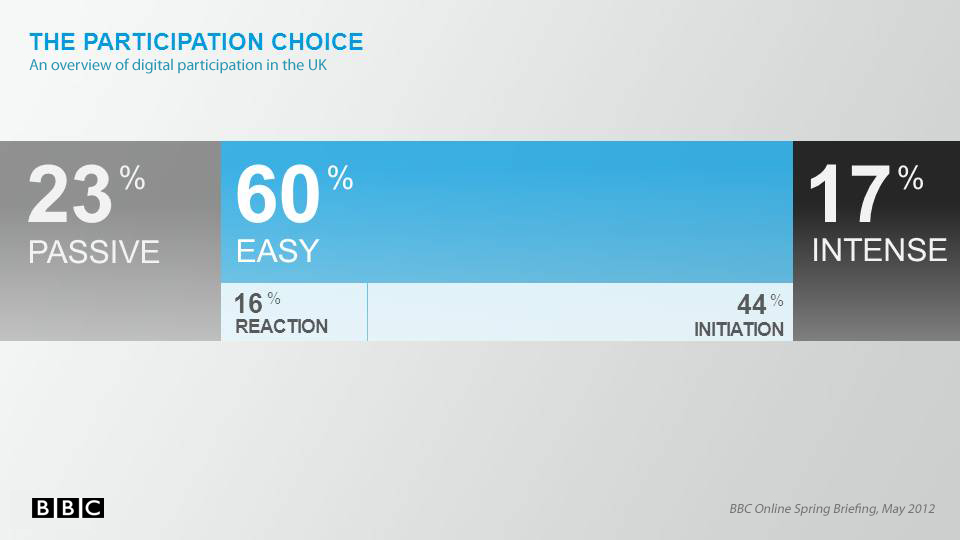
Interesting piece on the BBC blog in 2012 (how did I miss it…) by Holly Goodier about their research on Social Engagement – essentially the old 1/9/90 (1% writers, 9% commentors, 90% readers) was partly a measure of the difficulty of access to the technology. As technology has made it easier to write and respond (think Twitter et al) the picture has changed:

  • The model which has guided many people’s thinking in this area, the 1/9/90 rule, is outmoded. The number of people participating online is significantly higher than 10%.
  • Participation is now the rule rather than the exception: 77% of the UK online population is now active in some way.
  • This has been driven by the rise of ‘easy participation’: activities which may have once required great effort but now are relatively easy, expected and every day. 60% of the UK online population now participates in this way, from sharing photos to starting a discussion.
  • Despite participation becoming relatively ‘easy’, almost a quarter of people (23%) remain passive – they do not participate at all.
  • Passivity is not as rooted in digital literacy as traditional wisdom may have suggested. 11% of the people who are passive online today are early adopters. They have the access and the ability but are choosing not to participate.
  • Digital participation now is best characterised through the lens of choice. These are the decisions we take about whether, when, with whom and around what, we will participate. Because participation is now much more about who we are, than what we have, or our digital skill.

Through these insights they developed a new model of digital participation: The Participation Choice (see graphic at top of post). The link above also takes you to the video of Holly’s talk on the subject.

Although this is more a “Social Media” piece of research, the lessons for using similar tools in a Social Business setting are clear – the tools can drive the level of engagement well, or badly.

To reverse the old saw, if the implementation is poor, it may actually be the tools that are to blame, not the workers.


Share this:

  • Tweet
  • Email

Filed Under: collaboration, social business, social media

The Dark Side of Open Data

January 31, 2014 By Alan Patrick

The Dark Side of Open Data

I gave a talk at the Open Data Institute on “The Dark Side of Open Data” – short writeup on the Broadsight blog over here.

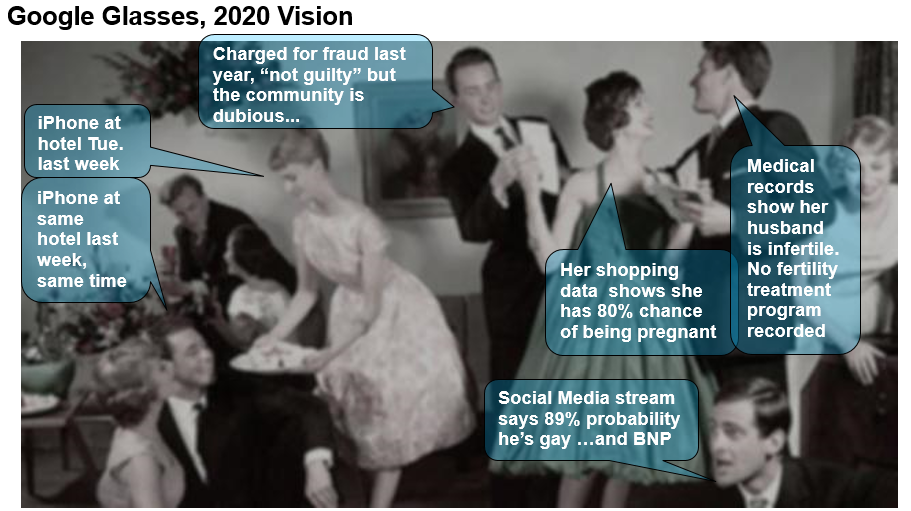
Picture above is from one of the slides, imagining augmented reality glasses which use facial recognition then search social media and various databases to get the dirt on people at a cocktail party. All the cases in the picture have already occurred, or could if data from proposed Open Government databases was triangulated.

My presentation is over here; and the audio is here

Share this:

  • Tweet
  • Email

Filed Under: business innovation, data analysis, digital disruption

« Previous Page
Next Page »

Sign up for our regular Agile Elephant Newsletter - news, posts, ideas and more.

My Tweets

From the Agile Elephant Blog

  • The Metaverse doesn’t exist yet, but…
  • Impossible Things get Disruptive
  • Clarity, Cloud, and Culture Change at IBM

What Next?
Take a look around our site, check out our approach, see how we can help, join the conversation on our blog or contact us to find out more.

About Us

Agile Elephant is a new kind of consultancy designed to help companies embrace the new digital culture of social collaboration, sharing and openness that is changing business models and the world of work.

Contact us to find out more!

Our founder's blogs:

broadstuff

@DT on Medium

Technotropolis

Our blog:

The Agile Elephant Blog

Site Log In | Site Log Out

Subscribe to Site RSS

Subscribe to our Blog via Email

Enter your email address to subscribe

Join 30 other subscribers

Copyright © 2026 ·Streamline Pro Theme · Genesis Framework by StudioPress · WordPress · Log in