“If you live to be a hundred, I want to live to be a hundred minus one day, so I never have to live without you.”
 A very sweet thought from Winnie-the-Pooh. Disney by the way, not A.A. Milne. Well it is Valentine’s Day and it’s exactly 10 years to the day since I started my love affair with the one-to-many messaging service called Twitter. Am I still that passionate? Could I live without it? Actually, we had a fantastic honeymoon period and some amazing highs, but our relationship has hit rocky patches recently. We used to talk all the time, but we don’t communicate quite like we used to. Can we change together? I’m not giving up though. Like all relationships of any value you have to work at it. But what have I learned looking back from my 10th anniversary? What’s the context, both in terms of the backdrop of digital history, and in what happens next? Let’s see.
Do you have a Cluetrain?
When I meet marketing or media professionals at some point I ask them whether they’ve heard of the Cluetrain Manifesto. Their answer presents a digital divide. Those that know of, or have read the 95 theses have a better understanding of digital marketing (and the Internet) as a network of networks of conversations. Those that haven’t heard of it have old style marketing thinking – the Internet in terms of a broadcast and traffic. I’m in awe of the book. Published in 1999 Cluetrain is as relevant today as the day it was first published almost 18 years ago. Let’s pick out 3 of the 95 tenets.
- #1 Markets are conversations. (The foundation of all ingredients of social media and user generated content that has changed marketing forever.)
- #6 The Internet is enabling conversations among human beings that were simply not possible in the era of mass media. (Technology allows two way, person to person communication across the globe in real time. And then the conversations have to adapt again when AI and machine learning mean that sometimes it’s a human talking to a bot.)
- #12 There are no secrets. The networked market knows more than companies do about their own products. And whether the news is good or bad, they tell everyone. (Companies aren’t in control of their brands anymore, but they and we have huge opportunities from the vast amounts of data generated across the web for our analysis every second.)
Twitter has been at the leading edge of these changes over the last 10 years. Buying has changed, and so selling has had to change, and the key word is social. Now every sales person has to think social if they want to be effective, and Twitter is a channel you can’t ignore in the communications mix. Now every brand, event and TV show has a Twitter handle, alongside some other social channels. Twitter has become an essential route to get the message out and feedback from both B2B and B2C marketing. It’s part of the marketing fabric, in most geographic markets, now. Most billboard adverts you see will have the brand’s Twitter alongside their web address. For the fanbase of most TV shows it’s an essential component. Season 6 of The Walking Dead averaged 435,000 tweets per episode. Even that can be topped – the premier episode of season 7 generated 4.7 million tweets, when two of the beloved characters died. That’s buzz of a different colour!
The short message is the medium
Why 140 characters, and why is that so important? There is a magic to microblogging, and a magic to the economy required in a short message. But let’s have some history. Twitter (which started as Twittr, after the fashion of web 2.0 startups dropping their vowels) was envisioned back in 2006 by co-founder Jack Dorsey as an SMS based messaging service for friend groups to keep up to date with each other. Jack sent the first message on Twitter on March 21st 2006. It read, “just setting up my twttr”.
An SMS message is 160 characters long, so Twitter (as it was eventually renamed) grabbed 20 for control characters, and provided 140 for messages. But why 160? Actually not everyone remembers how big text messaging was before Cluetrain and the age of social media. It was created within the protocols and standards of voice messaging in 1985 as part of Global System for Mobile Communications or GSM here in Europe. SMS was to use the voice optimised bandwidth to transport data messages on the signalling paths needed to control the telephone traffic during periods when no signalling traffic existed. That meant unused resources in the system could be used to transport messages at minimal cost. It was Friedhelm Hillebrand of Deutsche Telekom, working on the GSM standard, who defined 160 as the message length – to use the spare bandwidth cheaply, there had to be a hard limit. Apparently he sat at his typewriter back in 1985 typing example short messages, and none of them took more that 160 characters. Then he looked at messages on postcards he’d received, and even did some research on example Telex messages. They all matched the 160 limit, and so his argument was accepted. Even so it was a while before text messaging became a commercial reality. Hillebrand hit upon the Dunbar number equivalent for short form communication. A length that allows for true meaning and emotion in no more than a dozen words. Great for a status update or a strapline, but leaves enough room for elegance, humour and even poetry. Ideal for today’s world where the signal is struggling against so much noise, and that’s exactly why SMS and now Twitter have taken hold.
The first SMS message wasn’t actually sent until December 3rd 1992, from engineer Neil Papworth to Richard Jarvis of Vodafone. The following year Nokia made SMS capable phones, and then the first commercial SMS service was offered by Radiolinja in Finland, followed by Vodaphone launching a service in the UK in 1994. Because of the low cost SMS took hold, particularly with the younger demographic, and was a very big deal in its own right. By January 2001 more than a billion texts a month were being sent in the UK alone. In 2004, prime minister Tony Blair joined the text and mobile revolution when he took part in a live text chat with thousands of callers.
Who’s in charge?
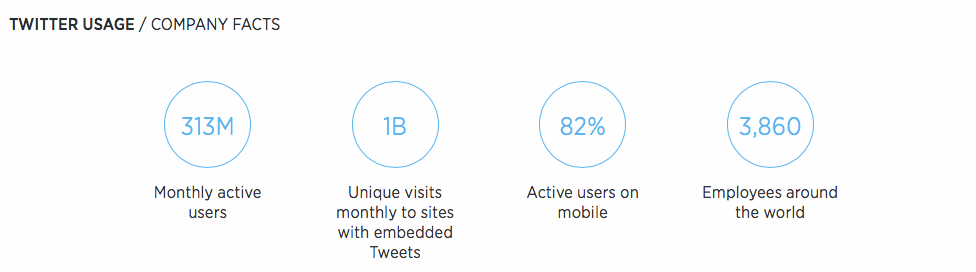
The community, that’s who! Twitter’s power is decentralised and has given a voice and influence to users in ways no other social network has. Right from the start it was the users who were creating the utility. It was users who started to use IRC (internet relay chat) conventions like @ for names and # for topics, with Chris Messina and Stowe Boyd naming the hashtag, and Twitter followed up with the functionality to make that work. Shortly after I joined in 2007, Twitter really took off at that year’s South by South West. It jumped from 20,000 messages a day to 60,000 because there were plasma screens in the halls displaying as the conference back channel. From that point on it spread to over 200 million active users in the first seven years, and the pace has slowed to around 320 million active users now. It has changed history, playing a role in the Arab Spring or in campaigns like #BlackLivesMatter. It has changed world news gathering at a turning point in 2009 when Janis Krums tweeted a photo of US Airways Flight 1549 after it touched down on the Hudson River that went viral, before anywhere else had the story. It’s achieved a new focus of attention as Donald Trump has continued to use it as the way to talk to directly to the American Public as he moves from the campaign, through his inauguration to his first 100 days in office. However, Twitter only grew by 2 million active users in the 4th quarter of 2016, whereas Facebook grew by 72 million users in the same period.
After a wild successful IPO in 2013, Twitter began to struggle dealing with shareholders and market expectations and the stock took a downturn. Jack Dorsey, co-founder and author of that first tweet, who had been ousted in 2008, was brought back in as CEO in 2015. They’ve made changes, there has been talk of extending the 140 character limit, they’ve acquired Persicope for live streaming, but they haven’t articulated their direction anywhere near clearly enough. There have been rumours of acquisition by Disney, Salesforce and Google. From my vantage point they need to shift their balance of listening from the market and shareholders to their community of core (and new) users. Oh, and by the way, in October 2016 Twitter’s Chinese competitor Weibo just went past it in terms of market capitalisation.
Is Twitter dying?
To paraphrase Frank Zappa, Twitter is not dead, but it smells funny. Back in the late 2000s Twitter was like a village or the town square. I had real conversations with people on a regular basis. I’ve met and interacted with new, likeminded people from all over the world. It brought me business. It brought me friendships. It showed me ideas, music, books. It brought me speaking opportunities that would never have happened any other way. It helped me have impromptu meetings with cool people who spotted me on Twitter at a particular cafe. To make it even more personal, my particular Twitter community helped me enormously with support when my father was dying (they know who they are, and I thank them from the bottom of my heart). That’s value!
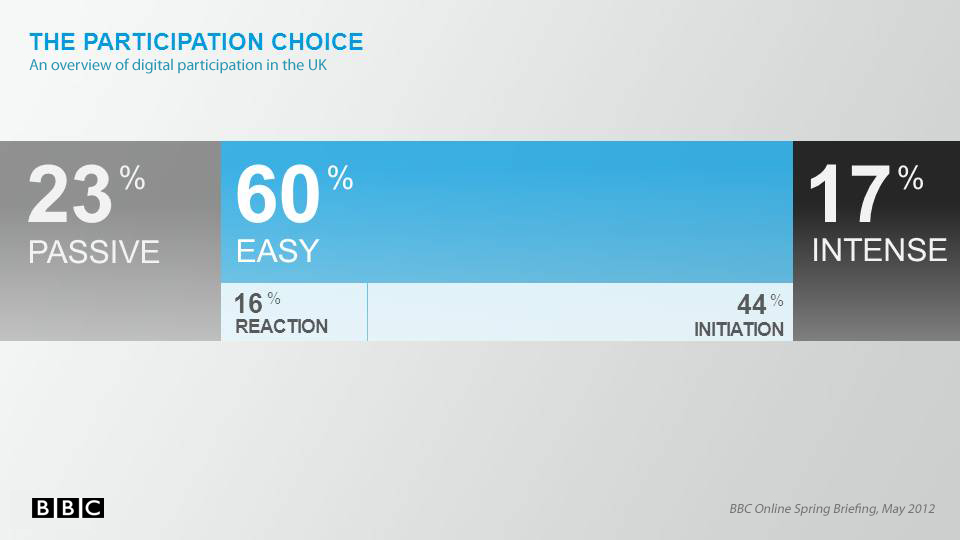
Now by 2017, the village has grown to a noisy urban sprawl and then a country of major cities and communities, with all of the hustle and bustle and impersonality that comes with that kind of territory, made worse by the fact that there isn’t much of a government or police force to control things. Too big for the kind of community policing that happens in smaller groups. The Jakob Nielsen 90-9-1 rule still applies, where 90% are lurkers, with 9% creating a little and 1% creating most of the content, but now the numbers are at a different scale. The conversations I used to have are now happening elsewhere, on Facebook and LinkedIn and Slack. Umair Haque wrote about this in 2015 but added the key problem of abuse we now face on Twitter and the web. He said:
“The problem of abuse is the greatest challenge the web faces today. It is greater than censorship, regulation, or (ugh) monetization. It is a problem of staggering magnitude and epic scale, and worse still, it is expensive: it is a problem that can’t be fixed with the cheap, simple fixes beloved by tech: patching up code, pushing out updates.”
Twitter has given everyone a megaphone, and there are plenty of people who misuse it. We have mob rule. We have shaming in ways I’ve never seen before. We have a realtime communications mechanism that is highlighting the divisions and flaws in our societies, and this has been brought in to sharp focus by recent political events like Brexit in the UK or Trump’s election in the USA. When politics and religion get in the mix, emotions can run high in ways that I have difficulty understanding. I’m all for more passion, by I want my arguments rational.
So we’ve definitely got a problem, and we’ve definitely lost something, but I don’t believe that means Twitter will die. It’s become too embedded in to the nerve system of business, marketing, government, politics and the World to go away. Even in its current form it provides a service and gives value. It stills provides me with news sources and discovery and connections that add value. But Darwin is calling and it needs to evolve.
What next for Twitter?
I don’t know Jack…. but what would I do if I was in his place? Like it or not, as a Public company they need to manage the finances quarter to quarter, along with market expectations, otherwise he and his executive team will be overtaken by events and it will become someone else’s problem. However, I believe the larger focus of attention should be addressing the needs of their community of core users and remembering the key ingredients that helped build Twitter in the first 5 years. Actually Jack should be looking to lessons from my current favourite business book Team of Teams. Twitter’s community of active users is the complete opposite of a business grappling with a command and control management structure. There is no structure. By definition it is self organising. The users are already formed in to loose teams and tribes, but those teams need tools to help them do a better job of defining, moderating, guiding and organising those teams so that they get more value from their connections and their live conversations. If the abuse problem is the single biggest issue, then they need much finer grain tools to help treat and manage it at source – viewed as an infection, they need antibodies and antibiotics to kill it as it springs up. Not so much a police force as helping community self moderation. Just like in Team of Teams, the Twitter leadership needs to think like a gardener, creating the right environment for the teams to thrive. They’ve got smart product people who can add the functions needed, but they need to narrow their focus to help individuals and groups rather than considering the user base as a whole.
Another key ingredient to make the team approach work is a shared vision, and so Twitter needs a much clearer direction from the top, a much clearer annunciation of what it’s for and why. In those early years, that came from the community itself. More than anything Jack needs to do some listening.
This is the first of a sequence of posts from us Elephants on what’s next for the digital landscape, the future of mobile, group messaging, conversational commerce, artificial intelligence and more. What do you think? Contact us with suggestions, questions – we’d love for you to join the conversation.
image courtesy bookofthefuture.co.uk and digitaltrends.com